Biography
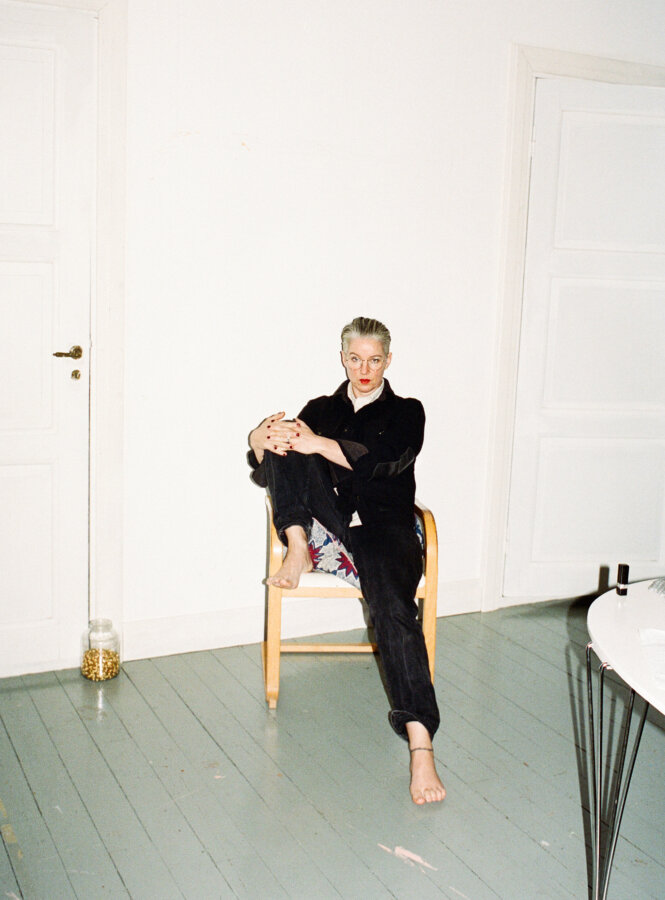
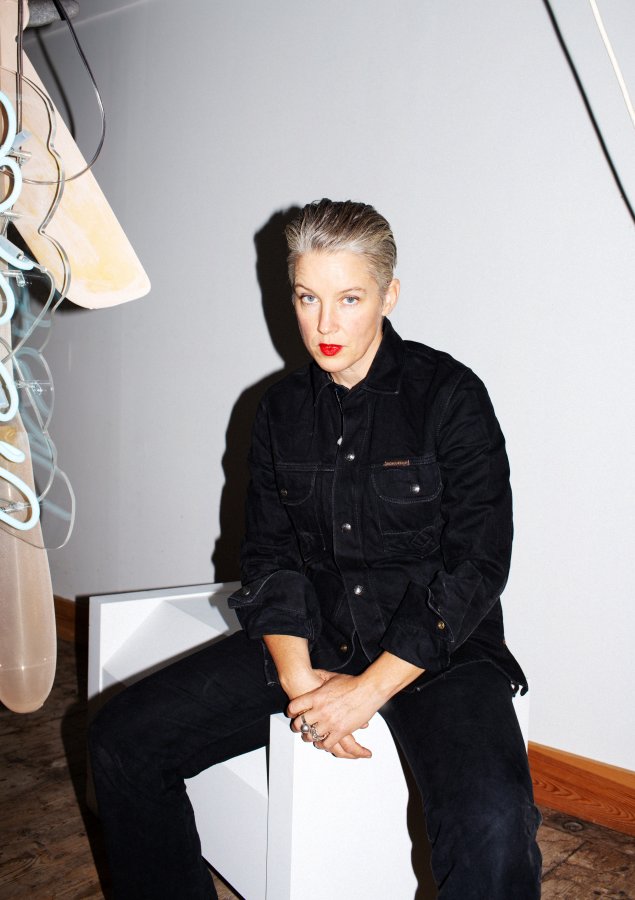
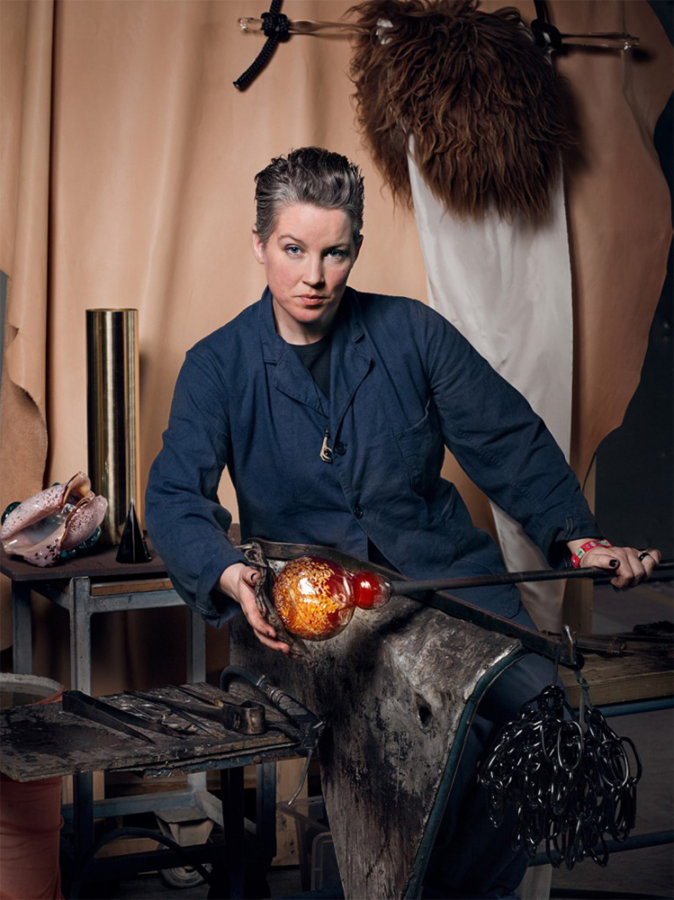
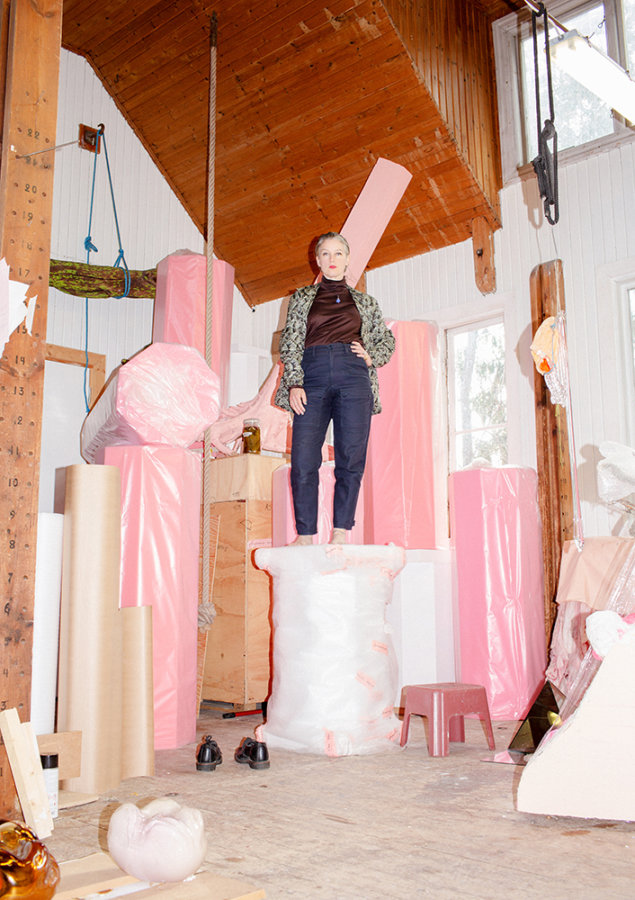
(born.1975 Stockholm) lives and work in Månsamåla and Stockholm.
Jungnelius’ artistic practice entails a material exploration shifting between the monumental and the social and psychologically constructed settings. Through the physicality of the object she inquires how identities and bodily desires are formed and expressed. Her interest in body and matter is centered around issues concerning the constant re-negotiation of these two entities throughout human history.
Åsa Jungnelius b. 1975, lives and works in Stockholm and Månsamåla, Sweden. She has been exhibiting regularly in Sweden and internationally since the beginning of 2000 and is engaged in numerous public commissions such as the new public subway station Hagastaden in Stockholm, opening in 2026. Jungnelius’ breakthrough was with her early works in glass and she has since held the position as one of Sweden’s leading artists within the field.
Her works are represented in the collection of Moderna Museet, Stockholm, The Swedish National Gallery to name a few as well as several prominent private collections around the world.
Honorary Doctorate of Linnaeus University since 2022
Represented by Galleri Leu, Munich and Spazio Nobile, Brussels
CV
Education
2004
MFA Konstfack, College of Arts, Crafts and Design, Stockholm
Solo Shows
2023
Galeri Leu, Thunder Rotator, Munich
2022
Venus Shadow, Galleri Glas, Stockholm
2022
OPEN, Market Art Fair with Galleri glas, Stockholm
2021
Inner world exhibition, Pavilion1: ENERGY, Norrköpings Konstmuseum
2020
Open, Stene Projects
2019
Artifacts, the Orgins of Things, Vandalorum
2018
Artefakter, Fullersta Gård, Stockholm
2018
Kraft, Tête-à-tête with Heidi Björgan
2018
Tête-à-tête, Olseröds Konsthall
2016
Coquille de Mollusque, Market Art Fair at Drottningholms Slottsteater
2015
The Monkey Cage, Växjö Konsthall
2012
Mother Earth, Kalmar Konstmuseum
2011
A Study of the Relationship Between the Hole and the Pole, Crystal, Stockholm
2010
In Memory of, Market Art Fair, Market-at-Large, with Crystal, Stockholm
2009
Watch out, I’m Out to Get You, UKS, Oslo
2009
In My Imagination, VIDA Art Museum, Öland
2009
Åsa Jungnelius Presents, Skövde art museum
2009
Make Up, Vessel, London
2008
Watch Out I’m Out to Get You, Crystal Palace, Stockholm
2008
Who is it! II, Eskilstuna Art Museum
2007
Fun, Fearless, Female with Ulrica Hydman Vallien, Svensk Form, Stockholm
2007
Who is it? Blås&Knåda, Stockholm
2006
Jihani Kalapour, Tensta Konsthall, Stockholm
2005
Fun, Fearless, Female, with Ulrica Hydman Vallien, Smålands Museum, Växjö
Group Exhibition (Selection)
2024
TROP-PLEIN, MusVerre, Sars-Poteries, France
2023
Solliden Palace, Anniversary exhibition, He, Mickey Mouse and the Baby, Öland
2023
Fingers to the sky and mouth to the ground. Virserum’s art gallery. With Linda Persson, Moa Franzén and Kerstin Björk, Viserum
2023
The shadow of Venus, Duo with Bertil Vallien at Kost Art Gallery, Kosta
2022
Spazio Nobile Gallery, Nomad, Brussels
2022
M’Illumino d’immenso, Spazio Nobile / NOMAD, Capri
2021
100 YEARS OF CONVIVIALITY: what you can see is what you can imagine, Kunstnarenshus, Oslo
2020
En paradisattack, Liljevalch, Stockholm
2020
Signature Women, Artipelag, Stockholm
2020
Misschiefs, curated by Paola Bjaringer, Stockholm
2019
The Immeasurable, Curators: Hannah Conroy and Linda Persson, Thames-Side Studios
2019
Creation, Stene Projects, Stockholm
2019
SE Glass, Glazenhuis, Belgien
2019
Still Burning, Curators: Giulia Casalini and Camilla Påhlsson, Varbergs Konsthall
2018
Scene Unseen in the Subtropics, Curators: Feng Boyi and Chen Shuyu, He Xiangning Art Museum in Shenzhen
2018
Tidal Ground, Curators: Asrin Haidari and Emily Fahlén, Luleå Biennial
2018
Public Luxury, Curator: Kieran Long, Arkdes, Stockholm
2018
Verket, Curator: Caroline Gustafsson, Avesta Art
2017
The Encounter of Bodies, Curator: Woodpeckers project, Ystad Konstmuseum
2017
Walk the Line, Dunkers Kulturhus, Helsingborg
2017
Room With Its Own Rules, Curator: Matylda Krzkowski, Chamber, New York
2017
Handmade: Scandinavian Glass Starting All Over, with LAST studio, The Glass Factory, Boda
2016
Gränslöst, Göteborgs Konstmuseum
2016
Moving Mass, The Glass Factory, Boda
2016
Örnsbergsaktionen, Stockholm
2016
Swedish Glass, Millesgården, Stockholm
2016
Imago Mundi, Dianxi Science, China and Venice
2015
Moving Mass, Kalmar Konstmuseum
2014
Formulas, Gotlands Konstmuseum, Visby
2014
Baroque, Nationalmuseum at Kulturhuset, Stockholm
2014
Grand Finale at No Picnic, Crystal
2014
Grand Finale at Hotel Diplomat, Crystal
2014
Aurora, Pera Museum, Istanbul
2014
Örnsbergsaktionen, Konstakademin, Stockholm
2013
Home Sweet Home, Liljevalch, Stockholm
2013
Pull, Twist, Blow: Transforming the Kingdom of Crystal, The American Swedish Institute in Minneapolis
2013
Nordic Glass, The Glass Factory, Boda
2013
Glass Elephants, signature exhibition, Bergrummet, Stockholm Furniture & Light Fair
2012
Smart: Process, Design, Objects, World Design Dapital, Helsinki
2012
Örnsbergsaktionen, Stockholm
2012
European Glass Context, Bornholm Art Museum
2012
On paper, VIDA, Öland
2012
SAK, Sven-Harrys Art Museum, Stockholm
2011
Chisina Circumvention, Center for Contemporary Art, Chisinau, Moldavia
2011
The Glass Factory with Alex Mirutzio, Boda
2011
Snippornas afton, Röhsska Museum, Göteborg
2011
Consume More, Norrköpings Konstmuseum
2010
Cash Flow, Botkyrka Konsthall, Stockholm
2010
Voila!, Borås Konstmuseum
2009
Crystal Magic Box, China Town, Los Angeles
2009
That Was Then… This is Now, Hordlands Kunstsenter, Bergen
2009
Swedish Style in Tokyo, Blond Buddhas, Komyoji Tempel, Tokyo
2009
Scattered Isolated Art, Kalmar Konstmuseum
2009
Swedish Love Stories, Super Studio, Milano
2009
Mais Ou Va Le Design Suedois, De Karin et Carl Larsson, Swedish Culture Institute in Paris.
2009
The State of Things, Form Design Center, Malmö
2009
Glas, Li Edelkoort Designhuise, Eindhoven
2008
European Glass Context, Gronbaeks Gaard, Bornholm
2008
Amber, Kaliningrad
2008
Sundborn Goes Extreme, Carl Larsson gården, Sundborn
2007
Artissima 14 with Fruit & Flower Deli, Torino
2007
Top of the World, Crystal Palace, Stockholm
2007
Trend Report, Röhsska Museum, Gothenburg
2007
Åsa’s Treasure, Acne Studios, Stockholm
2006
100% Design, The Bombay Sapphire Prize, UK and USA
2006
Work Out, Liljevalchs Spring Exhibition, Stockholm
2005
Swedish Kitchen, with Mats Theselius and Lars Thorvaldsson, Legnica Art Gallery, Poland
2005
100 Ideas About Crafts, Swedish Travelling Exhibitions
2005
Stuff, Galleri Roger Björkholmen, Stockholm
2005
Formbart, Liljevalchs Spring Exhibition, Stockholm
2002
Independent Design, Agata at Svensk Form, Stockholm
2001
Made in Sweden, Galleri Temp, Norway
2001
The Nordic Graduate Show, Ebeltoft Glass Museum, Denmark
Selected projects and exhibitions with WeWorkInAFragileMaterial
2009
Tumult: Contemporary craft, Gustavsberg Konsthall, Stockholm
2009
We built This City, SIX PM at V&A project space, London
2006
Happy Campers, Curator: Brett Littman, Skylight Studios PS1, New York
2006
The State of Things, National Museum for Art, Architecture and Design, Oslo
2006
At The Eagle’s Nest, workshop, Stockholm
2004
WeWorkInAFragileMaterial, ak28, Stockholm
Commission and Permanent, Site-specific Contemporary Works of Art
2019-2023
Norrköping art museum, temporary site-specific contemporary works of art at The south wharf, The inner world exhibition PAVILION# 1-20, commissioned by Municipality of Norrköping. Consultant: Mattias Åkesson
2023
Norrköping art museum, temporary site-specific contemporary works of art at The south wharf, The inner world exhibition PAVILION # Soil, commissioned by Municipality of Norrköping. Consultant: Mattias Åkesson
2023
Permanent site-specific contemporary works of art, Transit of Venus at Observatorielunden, Stockholm. Consultant: Stefan Hagdahl and Juni Wennergren Nordling, Stockholm Konst, donation by Interflora.
2022
Permanent site-specific contemporary works of art, Agnes Famn, to the new kulturhuset in Gävle. Consultant: Jan Stene and Björn Norberg, Gävle Konstcentrum
2022
Commission proposal, permanent site-specific contemporary works of art to Udevalla South Harbor, Västra Götaland region.
2021
Temporary site-specific contemporary works of art at Nybrokajen, The Mothers Pavilion, Consultant: Frida Cornell, Stockholmskonst
2020
Commission proposal, permanent site-specific contemporary works of art to Sahlagrenska Universitets Sjukhus. Västra Götaland region
2019
The South Wharf, commissioned by Municipality of Norrköping and in collaboration with Nyrens. Consultant: Mattias Åkeson, Norrköping Art Museum (On-going)
2019
Kivik Art Center
2019
Open Art, Örebro. Cutator: Jun-Hi Wennergren Norling
2018
Residence-In-Nature, My Mothers Hose in Laino. Supported by Kulturrådet and Iaspis
2018
Public Luxury, The Gateway, ArkDes
2018
Snippdipp Social Act with Rodebjer and Alma, Stockholm
2016
Stockholms läns Landsting, FUT, permanent site-specific contemporary works of art, Snäckan, to a new subway station, Hagastaden with &Rundqvist (On-going)
2016
The Monument, The city of Emmaboda, permanent site-specific contemporary works of art to Emmaboda city. Consultant: Görel Abramsson
2015
Stockholm’s läns Landsting, commissions proposal, permanent site-specific contemporary works of art to the New Subway in Stockholm
2015
Residence-In-Nature, a temporary collectively site-specific contemporary works of art in Kronoberg with the city of Växjö, Regionförbundet and Iaspis
2014
Residence-In-Nature, a temporary collectively site-specific contemporary works of art to Ronnebyån together with Växjö Konsthall
2014
The city of Växjö, commission proposal, permanent site-specific contemporary works of art to Kungsmadskolan. Consultant: Nicolas Hansson
2013
Stockholm konst, permanent site-specific contemporary works of art to Hötorgshallen. The gaze, the beef and the banana. Consultant: Lena From & Mårten Castenfors
2013
The city of Nybro, permanent site-specific contemporary works of art to Viktoriavallen. Confetti. Consultant: Barbro Hedenman
2012
The city of Emmaboda, Interior design at the primary school in Lindås
2011
Sveriges Allmänna Konstförening, SAK Edition 2012, Stiletto
2011
Stockholm konst, commission proposal, permanent site-specific contemporary works of art to Hötorgshallen. Consultant: Lena From & Mårten Castenfors
2011
The city of Emmaboda, Public art at the primary school, Bjurbäcksskolan, Materialitetens vitrin with Ludvig Löfgren
2011
The city of Kalmar, commission proposal, permanent site-specific contemporary works of art to Rocknebyskolan. Consultant: Anneli Berglund
2010
The city of Emmaboda, Interior design at the primary school Bjurbäcksskolan
2010
The city of Växjö, permenant site-specific contemporary works of art to Sandgärdsgatan, The black Panther together with Kosta Boda
2009
Mossutställningar, commission proposal, permanent site-specific contemporary works of art to “Dansens hus”. Consultant: Stella d’Ailly
Curatorial Practice and Other Projects
2019
New Småland and Soap Factory, Artist in residence, curated By Jonathan Habbib, Mike Bode and Kate Arford
2018
Berengo Studio in Murano Venice, Artist in Residence
2014
Residence-In-Nature, Artistic Director and initiator for collectively site-specific art in Kronoberg and Norrbotten (On-going)
2014
LASTSTUDIO, a collaboration with hand crafted functional objects, together with, Gustaf Nordenskiöld and Fredrik Paulsen (On-going)
2016
The Glass Factory, “Hyttsill” performance and book launch with dough, glass, and accordion, as a part of the project, Moving Mass, Boda
2016
The Glass Factory, Arabic Hyttsill, as a part of the project Moving Mass, Boda
2015
Nationalmuseum/Kulturhuset, curator of the exhibition 10 Artefacts from Boda
2013
The Glass Factory, responsible for the hot shop and its artistic content
2011
The Glass Factory, art adviser and curator, intervention with Alex Mirutziu
2006
Tensta Konsthall, Curator of the exhibition and the project Jihani Kalapour with Nationalmuseum and Tensta Hjulsta Women’s Center
2005
Smålands museum: Sweden’s Museum of Glass, adviser for the contemporary collection
2005
Tensta Konsthall, production site, 12 Tuesdays and Nice Things, with Sara Isaksson From
2003
Museum of Decorative Arts and Design, Oslo, curator with Love Jönsson, Sara Isaksson From and Päivi Ernqvist for the exhibition Contemporary Swedish Ceramics, Oslo
Design commission
2022
Kosta Bosa, vases Crackle
2021
Kosta Boda,tablewear, Moss
2020
Källemo, table, Ettore
2020
Kosta boda, vases Crackle
2020
Kosta Boda, candleholder and cake plate Ackee
2019
Källemo, hanger, Al Dente, with LASTSTUDIO for the Nationalmuseum in Stockholm
2018
Kosta Boda stemware, Crystal Magic
2017
Nationalmuseum, site-specific interior design objects to the new restaurant, in collaboration with LAST and Källemo
2017
The Glass Factory, New Glass 2.0 in collaboration with Royal Design
2017
IMAGO, European federation of cinematographers, statuette
2017
Kosta Boda celebrating 275 year, homage exhibition
2016
Bsweden, pendant lamp, Tiffany´s Brother, launch at Stockholm Furniture & Light Fair
2016
Orrefors, design of stemware, manufacted at Kosta glassworks
2015
Atelje Lyktan, design and manufacture of #2 Riff Relay, launched in Milano
2014
Agonist, design and manufacture of perfumes bottle White Oud
2014
The Glass Factory, a collection of hand made souvenirs and functional items
2014
Bsweden, pendant lamp, Tiffany´s Sister, launched at Stockholm Furniture & Light Fair
2014
Agonist, design and manufacture of perfumes bottle Olympos Moon
2014
Kosta Boda, artistic concept and design for the price trophy to Faktum
2013
Agonist, design and manufacture of perfume bottles Dark Sapphire
2013
Orrefors Kosta Boda, launch of the collection MakeUpYourKitchen
2013
Frankenstein Studio, artistic concept and design for ELYX, Absolut Vodka
2013
Orrefors Kosta Boda, extension of the collection makeup with a high-heeled shoe
2011
The Fifty Fifty Projects, design commission with Early Flower, In Chains and Body Print
2010
Agonist, design commission, perfume bottle
Employments
2012-2022
Konstfack University College of arts, crafts and design, department Ceramics & Glass, Senior Lecturer
2007-2013
Orrefors Kosta Boda AB, designer and artist
Teaching, Lectures, etc
2022
Röhsska museet, lecture, Materiality as a language
2022
Det Kongelige Danske Kunstakademi, lecture, public art, Bornholm
2022
The Norwegian Directorate for Higher Education and Skills, Peer Reviewing
2022
MINI MAX, ’Interacting within the landscape’ with Markus Vallien, Konstfack CRAFT! M2
2022
Market Art Fair, Materiality and meaning moderated by Sara Walker with Eva Mag and Tove Storch
2021
Research week – Konstfack, The meaning in the Making, Node 1 together with Markus Vallien and Mårten Medbo
2021
Lecture, Beckmans Collage of Design
2019
Master Class, Älvsbyn The New World Expo
2019
Mixed Mineds with Kultivator, at Folkteatern in Gothenburg
2019
Nya Småland, artist talk in Tranås
2019
HDK, Acagemy of Design and Crafts, Lecture, A Negotiation With Material as a Language
2017
Samtidskonstdagarna with Konstfrämjandet at Kalmar Konstmuseum, lecture and panel discussion about Residence-in-Nature
2017
Södertörn University, lecture, A Material Language, Stockholm
2016
Kalmar Konstmuseum, conference, Art and the manifestation of social change, together with Lisa Rosendahl and the art project Moving Mass
2016
Det Kongelige Danske Kunstakademi, master class, Mening of place – material and production as matter with Markus Vallien, Bornholm
2016
Forum Konst, Jädraås Art, lecture, Residence-in-Nature, Region Gävleborg Det Kongelige Danske Kunstakademi, opponent, BA
2015
Uppsala Konstmuseum, lecture, Residence-in-Nature
2015
Utvalt, seminar with Mårten Medbo moderator Jenny Nordberg, Tjörnedala
2014
The Swedish Consulate in Istanbul, Lecture and artist talk with Suzi Ersahin, cultural attaché and Ahu Antmen
2013
Uppsala Konstmuseum, artist talk, materials as a language Svensk Form, artist talk with Ingegerd Råman
2012
Konstfack University College of Arts, crafts and Design, ceramic and glass, tutorial BA
2012
Nationalmuseum, lecture Bengt Juhlins award
2012
Ölands konstskola, tutorial, Konst II
2012
Semren & Månsson, lecture Oslo National Academy of The Arts, tutorial and lecture MA
2011
Conference, Chisinau Circumvention – art and social progress in peripheral regions with support from Svenska Institutet and centre for contemporary art, Chisinau
2011
Konstfack, University College of Arts, crafts and Design, graphic design & illustration, lecture and critique BA
2011
Linneuniversitetet, lecture and tutorial MA
2011
Konstfack University College of Arts, crafts and Design, ceramic and glass, lecture and tutorial BA
2011
Beckmans College of Design, design, lecture and tutorial BA
2011
Norrköpings art museum, lecture and artist talk
2011
Borås art museum lecture and artist talk
2011
Kalmar konstmuseum, lecture, Reality club with Johanna Karlin
2009
Det Kongelige Danske Kunstakademi, lecture BA
2008
Konstfack university for art craft and design, art department, lecture BA
2008
Göteborgs Universitet Steneby, seminar about craft BA
2008
White architect Stockholm, seminar about glass in public space
2008
Röhsska museum, lecture
2005
Craft in Dialogue, National Council for Architecture, Form and Design, round-table talks on handicrafts
Other
2023
Member of Bildkonstnärsfonden
2018
Svensk Form, Jury, for Ung Svensk From
2017
Svensk Form, Jury, for Ung Svensk From
2017
Vandalorum, Jury, permanent, site-specific contemporary works of art
2016-2018
Culture of Ministry, member of Riksarkivets Heraldic Board
2016
Bornholm Art Museum, Jury, European glass context
2015
Svensk Form, Jury, for Ung Svensk From
2014
Svensk Form, Jury, for Ung Svensk From
2011-2015
Board member, Kalmar Art Museum
2009
Casino cosmopol / Svenska spel, Jury, art grant
2009
Design arkivet Pukeberg Jury sydosten, together with Gustaf Nordenskiöld
Printed Matters
2020
Floran, Mammas hus I Lainio, with Konstfrämjandet and Kulturådet
2018
Artist book, Artifacts together with Fullersta Gård, text by Andreas Mangione and Peter Bergman, by Studio Jonas Williamsson
2018
En skimmrande bubbla av glas, foreword to a book about Ingeborg Lundin, by Kerstin Gynnerstedt, published by Carlsson
2017
Side-Show, a conversation with Therese Kellner about Residence-In-Nature, a book with Konstfrämjandet
2017
OEI# 75/76 Nature concept, Landscape Paintings
2017
Moving mass, book, with Konstfrämjandet red Axel Andersson by Jonas Williamsson
2016
Residence-In-Nature, publication II, by Jonas Williamsson
2014
Handle with care, book and DVD, with Lisa Partby film and SVT
2014
Residence-In-Nature, publication I, by Jonas Williamsson
2011
Artlover magazine nr 6, artist talk with Annika von Hausswolff
2009
Artist book, Åsa Jungelius, by Alexandra Falagara
2006
Jihani Kalapour with Tensta Konsthall by REALA
2015
12 Tuesdays and Nice Things, publication with Tensta Konsthall by REALA
Grants and Awards
2023
Honorary doctor at Linneuniversitetet
2023
Best of the best, Red Dot design award
2021
Elle Decoration Swedish Design Award, the best furniture of the year
2020
Konstnärsnämndens, five-year working-grant
2020
FORM AWARD, the best furniture of the year
2020
Bukowski, Born Classic
2019
Smålands Akademi, Viktor Rydbergpriset
2019
2019 FORM AWARD, designer of the year in Sweden
2019
Elle Decoration Swedish Design Award
2018
Iaspis, culture exchange with Berengo Studio
2015
Konstnärsnämnden, five-year working-grant
2010
Konstnärsnämnden, two-year working-grant
2010
Residence frompris, the craft women of the year
2009
Konstnärsnämnden, project funding with WWIAFM
2009
Dagens Nyheter, Culture Award, Art and Design
2009
EDIDA, Elle Decoration International Design Award, designer of the year in Sweden
2009
Stiftelsen Längmanska kulturfonden
2008
Marianne & Sigvard Bernadottes Konstnärsfond
2005
Konstnärsnämnden, one-year working-grant
2005
Konstnärsnämnden, project funding
2003
Estrid-Ericsons Foundation
2003
J.L. Eklund’s Crafts Foundation
2000
Orrefors working scholarship
Represented
N/A
Moderna Museet, Norrköpings Konstmuseum, Eu parlamentet, Malmö Konstmuseum, Växjö kommun, SAK Sveriges Allmänna Konstförening, Glasmuseet Ebeltoft Danmark, Nationalmuseum, Statenskonstråd, Åmells konst samling, Stockholms läns landsting, Skövde konstmuseum, Göteborgs Posten konstsamling, Röhsska Museet, Smålands museum, The glass factory
Represented by gallery
N/A
Galleri Leu, Munich and Spazio Nobile, Brussels
Texts
Desire Utensil Container (2024)
Åsa Jungnelius in conversation with Lise Coirier
Lise Coirier (LC): What do the three words Desire/Utensil/Container stand for and how do they relate to each other?
Åsa Jungnelius (AJ): An abstraction - to be able to carry what we receive from life, but especially how we can give to each other. With the tools we have in our personalities, which are always sharpened and re-sharpened throughout life, so that we can reach each other and our own earth. I see desire as both a window and a way out, but also as a force for progress.
LC: Is there perhaps a sense of materiality and immateriality?
AJ: All conflicts materialise in our common society. How can we accommodate this with our physical and emotional memories and experiences?
LC: And a “secret recipe” you would like to share with us about how you approach materials such as glass or stone, in their individuality or as mixed media.
AJ: Personally, the lava-like power of glass in its creation gives me an inner peace. Also, the repetitive movement and physical labour involved in the process. When I work with a
larger team like the Kosta Boda glassworks, I have access to the power and experience of the great glassworkers. To create with the hand is to think, and when we are in a team, we think together like a six-headed monster, or rather, like a cat!
The artistic action and the work with stone, mostly the more malleable Carrara marble, is converted from the glass process. With the stone I slowly chew my way into the material; the slowness allows the sculpture to find its way further into my stomach and become my own soil. The fact that the material is so clearly linked to a place and the eternity of the universe, clarifies its use throughout art history and magnifies human smallness.
LC: Do you see a dichotomy between glass and stone that you would like to explore?
AJ: I am not particularly interested in the dichotomy of materials, as it is an approach that sees the world in opposition, which in turn can lead to exploitation, domination or conflict between different parties. I am more interested in the movement, energy and exchange that is possible with an open approach.
LC: How much does Småland's Kingdom of Crystal influence both your daily life and your artistic practice?
AJ: Småland has taught me so much, living and working in a glass village that has a long tradition of production, but also a plight in the collective memory. When the population left this place in the 1850s for America, when it was not possible to live on what the Earth gave, it created a mood of caution and despair. I am proud to be part of this tradition
of craftsmanship, of travelling, of inheritance and of the constant transfer of knowledge around the material glass. But perhaps what Småland has given me most of all is an immersion in circular thinking, a system in which we are all involved. It has also made other actions possible, such as blowing up a hole with dynamite, and thus giving birth to a new artistic chapter based on site-specific work.
LC: The landscape or industrial history of the region you come from has a lot to do with your work, can you tell us more about that? This seems to be both an "in-between space" for you and an exploration of our origins.
AJ: I think about how we have moved and lived through the landscape throughout history, and how in many places a pervasive chastening and impoverishing approach materialises
the prevailing political structures, power relations and ideological perspectives of the time. We humans undeniably leave traces, some of which are completely irreversible. I try to understand what mechanisms drive us; is it desire that haunts us?
LC: The combination of glass and marble/ stone is very special. What is the common thread between them? Is it perhaps the choreography of the gesture, the direct physicality or the idea of collage and assemblage that is important to you?
AJ: Physically I am drawn to these materialities. I always listen to my intuition and think that it will lead the way. I don't really know what the materials do with each other yet, but I know that there is a longing, something physical in me.
LC: I feel the search for minerality and the return to nature in your work, both in stone and in glass. How interested are you in wilderness, archaeology and human roots?
AJ: I am very interested in basic human needs, the question of what do we really need in a human life? For example, I have been working closely with the artist Markus Vallien and his knowledge of how to live with the materials available in your area and the basics such as fire, water, shelter, food, hunting, fishing,
edible plants, healing herbs. It is a method of looking back into the past, on how things used to be - a practice also developed with students at Konstfack in Stockholm. It is through these experiences, investigating how we lived before industrialism, that we can understand how to move forward together from the situation we are in now.
LC: Can you give us some references, travels or sources of inspiration that have guided you in recent years?
AJ: There are many journeys that in different ways have influenced the braid that formed my artistic practice. During the years that I was doing the project Residence - In - Nature locally in Småland and in the northern part of Sweden, Norrbotten, I was interested in understanding both the industrialised landscape that the forest industry represented, but also the spiritual in the concept of nature. I approached a shaman to take me down an abandoned well, a dizzying journey and an important passage to a deeper understanding of how all life and collective experience are connected.
LC: Talking about the philosophy you have developed in relation to artefacts, do you follow a precise process when making glass or stone objects? Or do you follow your intuition and direct gestures?
AJ: It is always intuition, an impulse that makes me do something. The uncertainty of the result is central, as it requires maximum attention throughout the process.
LC: What is the intrinsic value of desire in your work? Do beauty and aesthetics play an important role? Femininity and intimacy?
AJ: Desire is present in some of my work, perhaps mainly to describe vulnerability and imperfection. Beauty for me is something you can rest your eyes on and find comfort in, but I often wonder why people think beauty is good? I start with myself as a human being and the experiences I carry within me, I am obviously a feminist, although the whole concept has been popularised. The power of giving birth to a child has also preoccupied me, but femininity is more of an image or an ongoing social spectacle. Sometimes I participate and sometimes I am horrified.
LC: You are reinventing tools and mixing techniques, searching for new paths and a new palette like a painter. Is this research an individual quest or a team effort with studios like Kosta Boda - Orrefors?
AJ: It is both, materialisation, aesthetics and colours come from the artistic drive, like looking for a new combination of flavours like a chef.
LC: Documenting and photographing your process and living environment seems to be as important as the final result. Could you tell us more about your collaboration with the photographer Märta Thisner? There are different layers, from the anecdotal to the iconic representation of the object, as well as portraits of you in a very immersive context, which can range from everyday life to the most intimate 'moments' of your art practice.
AJ: Märta's observational skills and unique voice add another layer. She photographed a piece I made with assistants at Åfors 2018, The Portal, in the large barn in the village that served as a temporary studio. When we looked at Märta's photographs, it was as if we were discovering the world together. It became a collaboration, and Märta has been following me ever since. Märta has an innate ability to capture the relationship between people and materiality. In her ability to observe, she exposes human vulnerability and sees the environment as it is. Märta's images reveal a clarity when reality is wrapped in darkness.
LC: With this first solo exhibition at Spazio Nobile, what message do you want to convey to a new audience of art lovers and collectors?
AJ: I am always humbled by new situations like this. Of course, I want the artworks included in the exhibition to start a process, a thought or a mood in the social space of an exhibition or a person's home.
Porphyry
Fragment of an Imperial Egyptian Porphyry, found in Mons Porphyrites area north of Jabal Dokhan in the Eastern Desert of Egypt, dating from the beginning of the first until the middle of the fifth century AD. Thanks to Erik Mostert
The term Porphyry comes from the Ancient Greek language, meaning “purple”. In Ancient Roman times, Porphyry stone was considered a symbol of great prestige and royalty. It was often used for columns, statues, floors, official buildings, and other imperial and royal objects. Porphyria is believed to have the power to protect against enchantments, contempt, evil forces, and beings. If the stones are properly placed in the space, they can harmonise and enhance the energy. The Egyptians called porphyria a symbol of longevity and a stone with vital energy.
She too, a vessel (2022)
A text about Åsa´s practice by Masha Taavoniku
Year after year she has stood in front of the furnace in her workshop, each time performing the unwritten choreography that both facilitates and, ultimately, refines the task itself. Thirty years have passed and no day is like the last one, no movement identical with the next one. Nothing is simple but, nowadays, everything is a species of controlled repetition with a difference. In spite of the noise of the workshop, there is a quietness about her and, without even thinking the thought, she never has to worry about what to do next. Like a vessel, she carries in her body all the years that have passed.
For as long as she can remember, she has felt a dissatisfaction with the state of things. In her workshop, she found her chance to manipulate the world. The plasticity of the molten glass challenged her sense of security at the same time that she challenged the supposed limitations of the material. Domestic wares opened the doors to people’s homes, thereby giving her the opportunity to influence the movements and interactions that take place within the four walls of a home. Without blinking, she took every opportunity to create some sense of meaning. Right from her earliest work in the workshop she has made glass using moulds or free-blowing, she has worked as a product designer and created sculptures and site-specific public art. For her, glass dissolved all the previous limits of what was possible.
Taking deep breaths, she now blows vases using clay moulds that she has excavated by hand. Enclosed within the cavity, each vase assumes its singular shape; rough upside-down mountain tops, as though carved from dramatic mountains or rocks that often serve as a border between land and sea. Domestic wares and sculptures are united in the silence. The transformation in the workshop is from rock-hard grains of sand into an object which can be crushed into a thousand fragments at any moment. For anyone who is not an initiate, this can be difficult to grasp but she can be calmed by the reminder of everything’s transience.
Her artistic work unites her with times long before she herself existed. In Pliny the Elder’s (23/24 – 79 CE) book Naturalis Historia an event is described that, in earlier times, was claimed to describe the origins of glass. The written narrative deals with the manner in which an unknown number of natron merchants sailed from what is now Egypt to the coast of Palestine. Towards evening, as they began to feel hungry, the merchants lit a fire on the beach, making use of a lump of natron from their cargo to support their pan. The heat from the fire caused the natron – which is rich in soda – together with the sand to become the transparent viscous substance which, the following morning, had solidified into glass. Åsa Jungnelius is entertained by the story, but she knows exactly the temperature necessary for sand and soda to fuse and become glass. She knows that a modest campfire on the beach would not create the necessary heat. In all probability, the discovery of glass was a serendipitous event related to ceramics or to the production of metals; a process that later came to be imitated. But the fact remains that no one knows exactly how or when the first glass was produced.
Outside the workshop spring is in the air, trees are in bud and her body aches from the arduous work. One by one she carefully dips the hot, heavy vases into the icy water, whereupon the surfaces crackelate. The shiny vases’ seductive characteristics and the cracks that break the light testify to beauty and to the closely related fragility. From her stomach the colours are produced that have become characteristic of her art: billowing; sharp and pale nuances of green, blue, yellow, orange, violet, pink and white.
In the hot workshop, she wanders slowly over miles of beaches while the waves erase her footsteps in the sand. On her journey, she blows shells filled with pearls, lava-like candlesticks in bright colours, silver-coloured objects and sculptures. She knows that not everyone can see this but the glass carries with it everything she is and does; and therewith hundreds of years of time past. At any moment, the vessel can be broken. “Precisely for that reason,” she thinks as she takes another deep breath and blows into the glassmaker’s pipe.
Artifacts: the Origin of Things (2019)
Åsa Jungnelius (b 1975) is an artist and designer. Gunilla Palmstierna-Weiss (b 1928) is a scenographer, costume designer and ceramicist. The two meet prior to Jungnelius’s exhibition at Vandalorum, Artifacts: the origin of things, for an intergenerational conversation about their common experiences – both are flexible in their choice of artistic medium and began their careers in the repetitive discipline of crafts. Moreover, they share a key driver: to position themselves in history. The result is an artistic practice based on a fundamental respect for the greater context in which the work generates meaning, whether it be the material, industry, politics or friendship.
The conversation took place in Stockholm on 25 April, 2019.
The beginning and the craft
Åsa: We both come from a typical crafts background, and you are my role model in that you work across several genres, in the borderland between utility goods, stage design, ceramics, architecture and art. That’s why I wanted to have this conversation with you. It struck me that I’ve been a bit blind to history, but I also find that very little has been written about these practices, and the women who have had this approach. A cup is comparable to a monumental stage design, and one is not worth more than the other, they are simply different aspects of your artistic practice. That’s how it always was for me – the activity itself has been the important thing, and seeing the possibilities in different kinds of creative processes.
Gunilla: Yes, that is something that many find hard to accept, that you express yourself in different ways in different materials. It’s so weird, just keeping to one category. But then, I guess you could see it as a privilege, being able to stay so flexible. For me, my skills and background in ceramics actually entailed an artistically uncompromising approach to my profession as a scenographer. I took battles head-on, because I knew all the time that I had another professional skill to fall back on. This has given me wide latitude. Then, of course, it comes down to personality. I know some prominent painters who have stuck to their medium all their lives and still remained experimental in their practice. But I’m not like that. There are obviously different kinds of curiosity.
Åsa: I was originally drawn to glass and utility goods due to my discontent with the way things were, I wanted to learn how to influence them. When I got hold of a material, which was glass, it gave me the opportunity to manipulate a shape at several stages, from its design to the social space where it would eventually be used. I realised that if I had access to a craft, I could influence the social interaction between people, with the utility object as a point of departure. We relate to a glass with our bodies, and it is part of a social act that we invent in real time. I’ve never wanted to work with materials to create commodities. I’ve wanted to work with materials to create meaning.
Konstfack and companionship
Gunilla: I went to the Konstfack University College of Arts, Crafts and Design at Hötorget (in Stockholm), where I met Torun Bülow Hübe, who was studying metalwork. We had similar life situations. She had a new baby, and I was expecting. That was frowned upon at the College, we weren’t allowed to bring our kids. We both had a similar approach to our studies, we liked moving around between departments. It was against the rules, but I attended courses in decoration painting, textiles, sculpture and ceramics before finishing in 1952 (with a break for studies in Amsterdam and Paris). At the graduation ceremony, the director summoned Torun and me. They told us we would not be given any graduation diplomas, as the college believed we would come to nothing since we had “hopped around” and not stuck to our field. But I’ve never needed a diploma anyway, and my student years were the beginning of a lifelong friendship for Torun and me.
Åsa: When I was at Konstfack in the late 1990s, crafts were in a transitional period, when materiality was being discovered as a field that could potentially straddle several genres – something made of glass could be both conceptual and political. You could say that this approach was invented in real time, but the staff at Konstfack didn’t get what we were doing. I also had a classmate, Sara Isaksson, who shared my interdisciplinary interest, and we didn’t get any grants or prizes either. What we were doing was still a blind spot in the context of applied arts, that story hadn’t been written yet. But we found our context around us, in other fields where the same kind of issues were being explored, that’s where we found our nourishment. Now, as a lecturer at Konstfack, I would say that interdisciplinary practices are the norm among my students.
Skansen and the public
Åsa: Nowadays, manual industry and traditional crafts have become so rare that they are being regarded as performative acts. The glassworks where I am active in Småland are a convenient example; an enormous tourist industry is being developed around them, and people visit the workshops to watch the glassblowers in action. For me, it’s as though the glassworkers are the objects, their working bodies are exoticised. Because what they are doing is so unusual, physical labour from a distant past when all industrial production was manual. When I was studying at Konstfack, I had a summer job at the glassworks at the Skansen outdoor museum. This was an important and useful experience in many ways, but we were like caged monkeys. There I sat, making little mooses according to a model, we were just there to entertain. But it was experience nevertheless, it made me very proficient. You’ve experienced that too, Gunilla?
Gunilla: Yes, after Konstfack I was out of work, and so were my two friends, Greta Berge and Eva Lindbeck. I had heard that Skansen was closing its pottery. We managed to persuade them to let us use the workshop, on the condition that visitors could watch us turning pots. That meant every day of the year, except Good Friday and Christmas Eve. So, there we sat, and it made us better at our craft, of course, but a side effect was that we became a bit misanthropist. That was rather a high price to pay for having access to the workshop. The kilns were fired at night, so one of us always had to sleep there to watch over them. We took turns, every third night. From the workshop we could hear the Skansen animals gibbering. There were no showers or toilets, so we had to go down to the monkey house to wash. I eventually started making wall reliefs and small sculptures.
Clay and glass
Gunilla: I’ve worked a lot with pressing tools into my ceramic creations, going around scrapyards collecting material from our everyday reality, and then incorporating them in artistic designs. When I was making my large ceramic works, I borrowed workshops at the IFÖ factory and Gustavsberg. There I was, working among men who were flush-testing rows of toilets; it was quite fun working in a variety of environments. At Gustavsberg I built a gigantic sand bed inspired by mediaeval methods, and then I drew my patterns in it and moulded the viscous clay. That’s where I made a public work for ten high-rise buildings in Upplands Väsby, for instance. I used different colours and materials for each entrance. I made each work as a guide for kids, so they could find their way home, so they could say, “The house with the hammer and the white clay is where I live.” Glass certainly has its own language. I can imagine that I would have been inspired to make something different if I had worked in glass instead of clay, which is more tactile.
Åsa: Yes, because you interact with the material in very many different ways, and that obviously influences the aesthetic approach and possibilities. Glass is liquid and is in the fire first, and then you have to make it calm down and cool. With clay it’s the other way around, it comes from the elements of earth and water, and then it has to dry in the air and then go into the fire. My designs and my art have an organic heritage. But I’m also interested in what the shiny, “glossy”, attractive surface does. I like working with seductive beauty, and the notion that beauty is good. It’s my way of drawing the viewer into the work. But there’s also the organic quality, the cavities and phallic shapes that play against one another. I’ve always devoted myself to spatial designs, where other materials are in dialogue with the nature of the glass, like mirrors, podiums with sharp edges, metal and artefacts. Like fleshy enactments.
Solitude and collectiveness
Gunilla: When I’m engaged in my own design, my drawings or models, I basically work alone. But when I’m working on larger pieces, such as my monumental public reliefs, collaboration is crucial, for instance with the builders, because they have expertise I don’t have. At the theatre, I could never work with anyone who wanted to control me, like the directors who come along with finished sketches of how they want the stage to look, as if they could just order it. Then I just say, Good bye! Do it yourself! But in collaborations with Ingmar Bergman, for example, we deferred to each other’s respective expertise. Now they’re making him out to be a god who knew everything, but he was no theatre image person. His skill was on a different level, he was incredibly musical, he understood text, psychology, and movement. Then the collaboration is not a compromise, instead I call it a synthesis, when you meet and cooperate on equal terms as professionals. Discussions arose, of course, and could at times be quite heated. It is drama, after all.
Åsa: When I saw your exhibition Vivid Scenes 1964 – 1984 at Moderna Museet, with the models and sketches, it was like I could sense your concentration in the studio when you made them. It actually sent shivers down my spine. I began thinking about creative integrity, and this voluntary solitude that is so precious. Starting from your private artistic motivation, you can hook up with the larger systems. In my case, with public art, such as the underground station I’m currently working on, or the collective exploration project Residence in Nature. You initiate processes on a larger scale, but then you need to return to your own nest to be alone and concentrate. You upsize and downsize.
Gunilla: Yes, the absolutely best time in my life was when I could combine the two, working collectively, and just being on my own, concentrating in the loneliness of my studio. I wonder if I can still turn a pot the way I remember doing in my dreams.
Emily Fahlén is an art historian and curator based in Stockholm.
Den amusiska blicken och impulsen (2019)
Att som kritiker vara med i ett konstnärligt projekt låter en givetvis komma närmare konsten. Jag hade samma upplevelse som Lisa Rosendahl, som hade min roll i det här projektet för två år sedan. Hon jämförde konsten med potatisen. När potatisen introducerades i Sverige trodde man att det var blasten och blommorna som var grejen. Först ett tag senare upptäckte man att knölen var ätbar. På samma sätt finns det risk att kritikern bara ser blasten. Jag skulle vilja gå åt två håll från här. Dels försöka se blasten från knölens perspektiv – det är inte blast som knölen tänker på! Den har gratäng, pommes frites, brännvin för ögonen! Det är vad jag tyckte mig se hända när konstnärerna i projektet plötsligt så att säga skulle ”avsluta” det de höll på med, för att ställa ut det. Offentligheten provocerade fram tankar om vad man kunde göra med potatisen nu när den inte skulle växa längre. Det där ger mig ett tillfälle att ställa frågor om konst och icke-konst, och om konstens natur. Så arbetstiteln för min text är ”Konstens natur som icke-konst”.
En annan fördel med att vara med i ett konstprojekt i en liten by, Lainio i Tornedalen, är tvärtom att man börjar se konsten, eller det man nu håller på med i projektet, utifrån. Man förhåller sig ju till de bofasta, även om man sällan ser dem, och föreställer sig vad de skulle tycka om ens göranden i byn. Det är ett betraktelsesätt som åtminstone för mig blev ett slags icke-konstbetraktande, jag kastade en amusisk blick på mig själv och min grupp, på mina förväntningar, på våra diskussioner och det vi tog på allvar, på grejerna som folk höll på med, och tänkte – svammel, trams, löjligt.
Bland annat gick vi, i november, i Tornedalen, i en situation där vi hade hyrt ett flertal hus att bo i, gick vi ut ett stycke från byn och tältade i naturen. Hur gravt insnöad i konstvärlden måste man vara för att inte se hur löjligt det är! Det finns inga om och men här, det är fånigt. Att gräva där man står, att ta tag i just det där intrycket av larvighet blev min första impuls. Jag gillade den här betraktelsen från utsidan när jag äntligen var på insidan, och jag gillade också att identifiera mig och omfamna löjligheten. (”Omfamna” är nog inte rätt ord, det är mer som den spända förtjusning man känner när man ska sätta tungspetsen mot en lätt omogen citron.) Jag gillade tanken på att vi gör oss löjliga eftersom den kändes sann.
Vad säger det om konstpotatisen, utöver att det löjliga kanske är en del av dess natur? Jag vet inte än, jag påbörjade tänkandet i förrgår. Men jag har i alla fall hittat lite material om det, som jag kan dela med mig av: ett avsnitt i Adornos Estetisk teori som heter ”Det mimetiska och det löjliga” (jag citerar från Sven-Olov Wallensteins ännu opublicerade översättning). Så det här är vad jag kommer att försöka skriva om, så småningom.
”Det löjliga i konsten uppfattar de amusiska bättre än de som är naivt hemmastadda i konsten. (LEHL: Icke-konstblicken beskrivs alltså positivt, som något som ser eller förstår mer än konstblicken, nämligen det löjliga.) … Det löjliga är det mimetiska residuet i konsten, priset den måste betala för att den stänger sig inne i sig själv. Filistern har skamligt nog alltid lite rätt [mot det löjliga i konsten].”
De som påpekar det löjliga i konsten, har mer rätt än de som förnekar det; de konstnärer och kritiker som motarbetar det löjliga i ett verk, kommer därigenom att göra det till kitsch – det måste alltså vårdas. För om man tar avstånd från det löjliga tar man avstånd från de impulser, de kanske djupaste impulserna i konstprocessen, som det löjliga korrelerar mot. Vad är dessa impulser? Helt enkelt de som får en att ta sig an ett material och göra någonting med det, göra konst av det. Att göra en oanvändbar form av ett material som bjuder motstånd – klart att det är lite tramsigt. Men det är just där, säger Adorno, som anden (intellektet) tänds, i friktionen mot materialet:
”Konsten har sitt räddande moment i den akt med vilken anden i den den slänger bort sig själv.” Det där är ju en ganska komisk beskrivning av hur intellektet uppfattar sig abdikera när den grundlöst börjar bearbeta ett material, göra en form av en bit trä. Den verkar inte helt inse att den därigenom uttrycker sig – och hur ska den, i en given situation kunna veta eller ens tro det? Hemligheten, eller det gåtfulla i konsten, är också det som gör den löjlig, nämligen att intellektet slaviskt eller troget måste följa impulsen och dess väg genom materialet, utan att veta varför. Den här spänningen mellan att försöka göra något bestämt, en form som motsvarar något krav – om än bara en känsla -, och att tvingas göra det i blindo, trevande, ”har sitt korrelat i det löjliga…som de mest betydande verken fortfarande bär inom sig, verk vilkas betydelse till viss del ligger i att inte ha sminkat över det.”
Det löjliga är alltså en väsentlig del av konsten, kanske rent av det som gör den levande. Hur kul är inte det, att det som ger konsten ande och gör den intellektuellt stimulerande, är just det larviga! Och att vi försöker skyla över det för att istället presentera konsten som… någonting jävligt märkvärdigt. Fast det är just denna allians mellan pajaseri och intellekt som är det märkliga i den.
Utifrån det jag hittar hos Adorno – som är en riktig löjlighetsgruva – kommer jag kunna lyfta fram den samhällskritiska relevansen av allt det som var fånigt i vår mötesform i Lainio (som är precis lika larvigt i vanliga mötessammanhang, fast då fungerar löjligheten inte kritiskt, utan konformt). Och jag har gått hopp om att genom den kategorin till slut också kunna koppla konstprojektet till naturen – för det heter ju trots allt Residence in Nature – eftersom det löjliga i vissa former kan få ”människans likhet med apan” att blixtra fram. ”Konstellationen djur-narr-clown är ett av konstens grundskikt”. Det är i det skiktet potatisen växer, jordmån: fånighet.
Fire in the Well – The Hydrated Story (2018)
Herculaneum, the roman town buried in mud and ash, was discovered when a peasant digging a well by the Gulf of Naples came across marble sculptures and a marble floor –the stage of an antique theatre – in the year 1709. When I encounter the work of Åsa Jungnelius, I begin to reflect on the towns that were destroyed (and preserved for posterity) by the eruption of Mount Vesuvius in AD 79. I think of the art treasures of the villas, the luxury objects and indoor gardens. But I also think of the innumerable quotidian, religious or erotic objects that were found. Everything seen from the moral optic of later powers and talk of decay, as well as, naturally, coloured by my own experience of these places via visits, texts and images. Memory turns to fleeting encounters between past times and value systems; accidentally created still lives—a garbage bag leaning against a marble pillar. The place, the gaze and the temperament move between shine and muteness, between home and nature, between the personal and the political.
8–– –– ––[-)
Åsa Jungnelius talks about the society we live in by assembling different quotidian and reworked materials into fetishes of sorts; hand-made objects with inner souls and stories. In these composite objects times and places, and not least different social tensions, meet: city, industry, forest, equality, pleasure, struggle. We encounter wooden sticks, cloth, animal skins, hooks and chains of metal. But the recurring and main material is glass. A material as much hard to define for those who desire a satisfactory theoretical and aesthetical description of it, as for those who wander around the city’s many shop windows or amble through compact dwellings. Glass is eroded material that is heated up to a mass. A blank mute surface that continues to narrate with geological stubbornness. This transparent surface surrounds us in vast expanses, enormous quantities, and it everywhere offers a transition from sight to reverie. The passage is important in the art of Åsa Jungnelius; she makes use of it both in the figuration of a place and in the very coming into being of a work. The work with transparency, with its colour and form, with the addition of and attachment to other materials is a work that creates limits against the visible. To make visible is to be visible.
8–– –– ––[-)
In Werner Herzog’s film from 1976, Heart of Glass, a glasswork town falls into a depression when the glass master dies and with him the secret of how the red ruby glass that sustains the town is produced. The one who becomes craziest of all is the owner of the glasswork, an aristocratic man who believes that the glass gives eternal life and that the secret behind its red colour is using one’s own blood. In a new version of the film Herzog says that for every scene, he let all the actors be hypnotised, except for the one playing Hias, the protagonist; a prophet and mountain shepherd who wanders around the villages telling stories of the apocalypse.
Artifacts (2018)
The first work by Åsa Jungnelius that I ever saw was a chandelier in pink strung-glass. It was at once alluringly beautiful and slightly vulgar, and it woke in me some desire to possess it. But at the same time it reminded me of the decorative objects at my Italian grandmother’s home: how I walked around and fiddled with them, investigating what they wanted of me. Like the little dog in green crystal. Åsa’s art took me back to that space.
A bowl, a candlestick or a pair of shoes are seen in general as being there for us. They are normally to have a certain function and incite our sense of beauty. The green dog is just supposed to be sweet and pretty. We cast out or neglect the ugly objects; perhaps we laugh at them.
Åsa’s art triggers an entirely different process in us; in it, objects undermine authorities and establish new relationships. The question of function still arises but it is quickly subordinated to the demands that the objects place on us. Many of these objects seem to have come into being with a clear purpose: a bowl for dipping crisps in or a candlestick for lighting up the room. But they are also at the same time simply themselves, artworks in their own right.
An encounter with Åsa’s work can therefore be a little confusing at first. The pieces unhinge us from our habitual representations and we are forced to become agents. The objects gaze back at us, as if they wanted to make us think about who we are, how we relate to ourselves and to the world surrounding us. It is as if her artefacts knew that we are to see them. They speak a language other than our own, but they lift us from our routines, as if it were them who are the actors and we the objects of study.
The works included in the exhibition were crafted in Småland’s Kingdom of Crystal. Glassworks are traditionally seen as masculine environments and Åsa comments with her art on the area’s industrial history. And the history of glass is a multifaceted one. At the same time as there is a whole culture around the production of glass objects, the raw materials can also be found in nature. (A lightning can produce glass by vitrifying sand.) Glass is a material at once heavy and volatile, sharp and soft, solid and fragile; and still Åsa knows how to extend the possible uses of glass by also placing it in relation to other materials.
At Fullersta Gård we encounter a number of assemblages stemming from an elevated, spiritual state of the senses: A well that perhaps contains a truth about our past, our future or ourselves, a symbolic portal, the entry into another reality.
The set table presented on the second floor is to be considered as a social act. I myself imagine that Esther, or as those who work here call her, ‘the house ghost’, is specially invited to this party. Esther was a maid at Fullersta Gård more than a hundred years ago and has been seen around in the house. A table is set for us, but when the exhibition closes for the evening the objects stay in place and wait for the nocturnal guest of honour.
Written on the occasion of Åsa Jungnelius’ exhibition Artefacts at Fullersta Gård, Stockholm.
Landskapsmåleri i skala 1:1 (2017)
Sådant trodde jag inte på, var jag övertygad om, men ändå trängde jag in i andevärlden med hjälp av en schaman. Vägen dit gick genom en övergiven brunn, ett hål, en passage, en öppning i den orörda mossan med spegelblank avgrund. Med hjälp av schamanen krälade jag in och ut. Brunnens ejakulation kom i rosa och förde mig genom sin explosion av slem in i den andra världen, brunnens universum – är detta livets källa? Berättelser om mänskliga artefakter och existentiella behov beskrevs för mig i extatiska vågor. I brunnens universum hade jag förmågan att träda in i andras kroppar och vara; jag kunde återuppleva födelsen av mina barn, födda och ofödda. Schamanen säger – ”Naturen är levande, den består av gudar och andar, och alla delar av kosmos upplevs som förbundna med varandra. Universum består av ett verkligt nätverk av energier, former och vibrationer.”
Brunnen fann jag nära Moshultagöl i Ljuders socken, vid en för länge sedan övergiven boplats där marken idag främst används till industriellt skogsbruk. Det är en plats jag återkommit till under flera års tid. Här brukas naturen; den ägs, köps och säljs för att generera kapital. Rumsligt innebär det ett snårigt landskap där det är svårt att ta sig fram mellan grustagets, torvmossens, granodlingarnas och åtelns produktivitet. Obarmhärtigt lämnas urgröpningar och sår. I skiftet mellan bondesamhället och industrisamhället övergav smålänningarna av nöd denna plats för att finna bördigare mark på andra sidan Atlanten. Industrialiseringen av landskapet sågs sedan kanske som en lösning.
Min undersökning rör förståelsen av det vi vanligen kallar natur. Naturen som är en del av vårt gemensamma offentliga rum på ett lika självklart sätt som det urbana, en plats där produktion och romantik möts. Men vad är natur? I vilket tillstånd möter vi naturen? Och finns ens naturen i någon annan form än som en bild av sig själv, ett slags ”naturteater” som vi efter ett besök sedan lämnar? Kanske är komposten, det cirkulära systemet, det närmste natur vi kommer, ett system vi alla ingår i. Död, förruttnelse, jord, återfödelse, död, förruttnelse, jord och återfödelse.
Jag tänker på impressionisternas landskapsmåleri. De lämnade sina ateljéer för att vistas och måla i landskapet som en motståndshandling mot den rådande normen för verklighetsåtergivning. Land art-rörelsen omformade naturlandskapet i monumentalformat, och också detta var en motståndshandling mot konstens kommersiella system. Som en parafras/kommentar till båda dessa rörelser och ett personligt möte med bruksorten, en plats som tidigare var främmande för mig, ville jag pröva att arbeta direkt i landskapet i skala 1:1 och samtidigt titta på det som bild och rum för att undersöka om det går att röra sig genom bilden av natur. Det kan ses som en reaktion på en närvaro påxs och samverkan med en viss plats, där denna plats och det kontextspecifika formar varandra. De lokala förutsättningarna möter de globala frågeställningarna och ett kunskapsutbyte uppstår.
Inuti : Inuit (2016)
We are driving between Lessebo and Skruv. Dense forests line the road. It is still winter. Åsa meets my gaze in the rear view mirror and says that the idea behind Residence-in-Nature is to engage with its context on the scale of 1:1. She has mentioned this before, but it is just now, here, that the concept sinks in. What does this really mean? What could it mean?
At first I come to think of Lewis Carroll and Jorge Borges’ fictions about earlier civilizations’ attempts to map reality with such precision that the maps eventually became as large and detailed as the territories they attempted to describe. In both cases the representation and what was to be represented were conflated, effectively negating the difference between territory and map. By equating representation with reality the map’s logic and function was lost. But Residence-in-Nature does not have the map as its premise. It is the wrong tool and the wrong method for what the project seeks to accomplish. It is not about creating an exact representation of the place. Rather, Residence-in-Nature uses the concept scale 1:1 in order to denote a relationship.
The relationship constitutes a meeting where the context is as important as the artistic practice that encounters it. 1:1 describes a reciprocal exchange. Those materials, techniques, spaces, stories, images and people who are at and of the place create the conditions for how the artists utilize their knowledge. The surroundings shape the art as much as the art takes the surroundings as its material. The concept also describes a mirroring between two parties: the art takes place at the site just as the site takes place in the art. And as art relates to site, it also creates new sites.
The difference between navigating a place with the aid of a map or not is like the difference between measuring something with a measuring tape or through a direct comparison to my own body. The measuring tape establishes a universal value for the whereas in comparison to my own body I experience the distance subjectively. To know that we are standing four steps or 387 centimeters from each other is not the same thing.
We have a meeting at Lessebo paper mill among stacks of handmade paper. Of the hand, for the hand. Is this scale 1:1? Industrial paper production is located in the adjacent building. Industrialization altered the scale of reality; everything became more, larger, faster. The world was divided into abstract components. Direct contact with the context — the link between human, tool, and result, the conditions to independently shape and decide over one’s existence — vanished. At the same time, wage work created new possibilities, a different kind of mobility, new rights, prosperity. Factories were started, produced, closed down. Societies were constructed around them; filled and emptied at the same pace as the factories. Meanwhile images of reality were rendered with increased clarity. We zoomed out and zoomed in. A bird’s eye view became a satellite view. Molecular view became atomic view. Paper maps became Google Maps. Finally it became impossible to navigate the world step by step by being in it — everything had become image and we no longer needed to look up from the screen in order to move on, to the next image.
The difference between navigation aided by a traditional map or with the help of Google Maps is that Google Maps all the while operates in relation to your actual position and redefines which aspect of the map you see from that vantage point. Instead of seeing an image of the whole you only see that delimited area where you are right now. There is no longer any need to look up and assure yourself that reality corresponds to the map, since that relationship has been fragmented into so many small components that it has become nearly incomprehensible and irrelevant. It is also not possible to reach an end, to venture beyond the map: Google Maps blankets the earth’s surface without any noticeable seams.
To relate on a scale of 1:1 can be an attempt to establish direct contact. Not by pretending that there is a path back to a way of being before the images and the projections, before the yard sticks, the fragmentation, globalization, digitization, but by making visible and comparing all these layers of reality with ourselves, with our bodies, thoughts, and experiences. To say that there actually is a here and now anchored in time and space, and that it affects us in the same way that we can have an effect on it.
Perhaps it is similar to what the feminist theorist Donna Haraway speaks of when she describes situated knowledge. According to Haraway, who wrote about situated knowledge in relation to science, the only accurate objectivity is that which reveals how each conclusion has been affected by its context. According to this logic there are no facts that are not a result of who, how, where, and when; the historical context, its geographic, social and economic power relations and materiality.
Haraway critiques how the rational scientific community has favored seeing above all other senses and has created a scientific gaze portrayed as "a view from nowhere," as if abstracted from physical reality, and thus claims the right to represent the world while it escapes representation; a mode that Haraway terms "the God trick." Situated knowledge, on the other hand, makes visible, according to Haraway, the person examining, what is being examined, and the environment they are located in, and in such a way presumes that a gaze always comes from "somewhere."
Even if the role of the artist and art during modernity, unlike science, has been ascribed the function of communicating the subjective perspective and upholding authenticity, it has also been surrounded by a succession of neutralizing and regulatory spaces and procedures. When modernity divided the world into different areas of specialization — e.g. medicine, physics, psychology, geography, etc. — also art was made into its own, separate, sphere. Here all the creative potential, liberated through modernity’s break with tradition, could be set free, while this force under no circumstances was allowed to permeate any other sphere of society. Art was autonomous, in exchange for being entirely its own and in that way not having any actual effect on the world as a whole.
Different voids were created — such as the studio and the white cube — which effectively staged and gave form to this liberated outsiderness: separate spheres for production and consumption where these two modes could maintain their own fantasies. That the relationship between the artist and the consumer was abstracted constituted the foundation of art’s autonomy. In these autonomous spaces anything could be said; here was a critical distance which through its remove enabled another type of honesty than what the other areas of knowledge produced. But here was also a social contract that meant that all artistic activity was considered without real effect beyond art’s limits. Art represented and commented, but did not alter. To instead situate both the artistic process and the completed work at the center of daily life — an approach artists have used in various ways during different times and which we now also see in Residence-in-Nature — should be understood as resistance to this development, and as a way to de-neutralize art and the role of the artist.
From the situated perspective it is not possible to be an objective viewer who stands outside and observes the world from a distance. The philosopher Gilles Deleuze and the psychoanalyst Felix Guattari in their book A Thousand Plateaus differentiate between this "optic" way of orienting oneself in the world — exemplified by maps and satellite images — and what they term "haptic" sensation. The haptic viewpoint acts at close range and explores the world step by step: it does not utilize background and foreground, there is no horizon or unmoving universal perspective in relation to which everything appears. One is "in" the landscape instead of "in front of" it. As an example they use different nomadic peoples’ journeys through what they call landscapes of pure connectivity — deserts, oceans, icescapes — which are all under constant transformation and do not offer any fixed points but must be navigated through absolute presence. Deleuze and Guattari see this mode of relating in nomadic peoples’ art, such as in Inuit representations of hunting scenes where there is no central perspective; where animals’ body parts simultaneously point in different directions and where the landscape lacks distinctions between heaven and earth.
Did Deleuze and Guattari ever experience the landscapes they drew on for their theory? Although they describe a relationship that transcends seeing, their actual referent is an image: art. What they do not mention is the materiality of the image; that the Inuits’ hunting scenes often are carved from walrus tusks and that the material most likely has determined how the image has taken shape.
The relationship between image and material should be regarded as reciprocal. The absence of perspective is probably as much the result of the walrus tusks’ rounded shapes as it is an expression of a world view. That the image lacks distinctions between heaven and earth maybe instead illustrates the nature of violence in the hunting situation — of the moment when the limit between life and death and animal and human is suspended through intense close contact — rather than the relationship to a landscape.
In our media-saturated world, everything is seen from afar and close contact does not take place. The same distancing that destroyed the ancient alliance between human and nature enabled different forms of objectification, colonization, and control which still determine our daily lives. Can art offer another possibility? Can it be the opposite of the map by describing the world from within? The difference between Google Maps and the haptic approach, both characterized by a nearsighted absence of perspective, is presence and materiality: to orient oneself haptically is to always relate to the specific, while Google’s world view remains generically simplified no matter where you are.
On the airport shuttle to Kalmar Airport a screen displays ads for the "Giraffe" shopping mall. We slow to a stop at a traffic light, and through the window I see that the bus has stopped in front of the actual Giraffe Mall. For a few seconds the gazes of the large plastic giraffes on the store signage meet the gazes of the giraffes on-screen in the bus. This is also a form of direct contact. Then more ads: a veterinarian offering a discount on spaying and neutering; frozen chicken is on sale at the grocery store. Humans’ relationship to nature has rarely felt so alienated.
I wonder if Residence-in-Nature is an attempt to "rewild." Not in the sense of returning to a utopian concept of the natural, but as a means of turning wild our relation to reality by releasing it from the overwhelming systems of borders and control which dominate our contemporary life. The organization Rewilding Europe has as its ambition to return two million hectares of land to "wilderness" before 2022. Their work consists of reintroducing animal and plant species that have been threatened by civilization, and to then let nature take care of itself, which includes not intervening in forest fires and floods. The possibility to even think along these lines is an effect of the rural depopulation that has occurred as industrialized society has given way to a postindustrial urban economy. It is a historic moment: there are fewer people in the European countryside today than there were one-hundred years ago.
A place that humanity definitely retreated from exactly thirty years ago is the so-called "dead zone" around the nuclear power plant in Tjernobyl. In the areas in Belarus and the Ukraine that were emptied of people after the 1986 catastrophe, animal life now flourishes. Some species — above all large animals such as wolf, bear, and moose — have increased seven-fold since the disappearance of humans. However, toxic radiation makes itself known nonetheless: among some species the survival rate is as low as 28% and most of the animals show traces of mutations such as spots in the patterning of feathers and fur, or growths on toes or wings. Nonetheless, the effects of humanity’s retreat on the return of animals is striking. Nature is a self-organizing force in constant mutation.
It is March in Kronoberg. I dig in my coat pocket for my cell phone. Instead I find a pine cone I picked up at Gökaskratts Campground that morning. Then the pine cone was half frozen and as tightly closed as a brass knob. After a day in the warmth of my pocket it has bloomed; the scales are opened
like a fan and the pine cone has completely changed shape. Nature or nurture?
Now it is the end of May. Residence-inNature has taken its public form. I wonder if the relation 1:1 is applicable also to the relationship between process and result, and between art and the public. Even if the artists have related to the place 1:1 that does not mean the rest of us have the ability to relate that way to their art, or to the spaces it occupies. How can the work communicate the relationship between the artist and the place? How can it communicate the meaning of the relationship 1:1? In a moment of doubt I think that it is perhaps impossible to relate to anything on a scale of 1:1. That, perhaps, this is why art was necessary, to embody the gap between the human and the world?
I visit the Emigrants’ House at Culture Park Småland and read of the famine in the 1800s. Perhaps it is with art as it once was with potatoes. When the potato plant was first introduced to Sweden it was considered decorative. It was grown for its flowers, but failed to generate a great deal of excitement. In time it was understood that the attraction was not in the flowers but in the gnarled roots, an insight which resulted in the potato saving the population from starvation. Can we think of art in the same way? Has the potential of art on the whole been misunderstood because it has all-too often been regarded incorrectly? Have we stared ourselves blind at the flowers and not had enough insight to learn from the gnarled roots? When will we realize that it is through those roots that art can save all of us?
Maybe we already know this, artists most certainly do, but we need to find ways to apply this knowledge in ways that extend beyond the artist’s role and into life. The gnarled roots of art are what struggle beneath the surface, creating themselves bit by bit and following their own path, shaped by their encounter with the soil. One cannot see them grow. If you pull the roots up into the light the process ends and something else takes hold, a kind of harvest which is certainly satisfying but completely different from growth. In growth, creation takes place; it is what shapes us and our surroundings. Growth is a tactile practice. It cannot take place in a vacuum, but is intimately connected to an environment, a place, a material. It is situated, in us and in the world. Growth co-exists or does not exist at all. This is what gives us agency — the possibility to act.
In her book The Practice of Place the artist Emma Smith writes that artists cannot claim the exclusive right to practice art. The ability to practice belongs to us all. Art and the artist’s role is instead to make us aware of that possibility:
…artists cannot make any exclusive claim on art. Practice belongs to everyone. Artists merely choose to dedicate themselves to it. […] Practice is a process in which we are all involved. Art, in its production and experience, draws our attention to these practices. This is the role of the artist. […] By replacing the bench-
marks of capitalism, measurement and sequencing, with relationship as a primary mode of orientation, art does not offer dis-order (order disarranged) but the absolute impossibility of order. This approach is not only a means to autonomy and alterity but is potentially a more congruous practice of place; a practice of being.[1]
- Emma Smith, The Practice of Place, pp. 81–82, Bedford Press, London, 2015
In Kronoberg county there are now artworks by ten practitioners from different artistic disciplines who have participated in this year’s edition of Residence-in-Nature. One way to understand their presence is that they want to redirect our attention to exactly this, to our ability to have an active relationship to reality and our surroundings, and to practice our lives here and now, on a scale of 1:1.
Inuti is the Swedish word for "inside", "on the inside", or "within". Inuit is a term utilized by certain Arctic ethnic groups; it means "people" or "humans" in Inukitut.
From Place to Idea and Back Again – Thoughts about and around Six Art Works along the Ronneby River (2014)
If you venture into the forest, you are likely to reemerge transformed in one way or another. Every storyteller, outdoors person and paper mill baron knows this. The forest supplies us with raw materials, personal insights and encounters with nature. It is a well-worn metaphor for that thorny journey called life, and a very real necessity for an abundance of organisms, from microscopic spores to multinational corporations. The adventurous journey through the forest is perhaps also the archetype for linear storytelling, the narrative form which long dominated our western culture: one begins at its outer edges, disappears in among the trees to be surrounded by one’s fate, only to a few camp fires, chapters or novels later see the trees grow sparse and have the story reach its conclusion. The forest is – like the street, the beach and the white cube – a generic idea and a fictive image as much as it is a specific place and reality.
The forest plays a central role in a Swedish context. It was, and is, one of the cornerstones of Swedish industry and therefore also of the modernization of the nation. The forest literally built the society while it at the same time paradoxically acquired the role as a place of retreat when society was becoming too intrusive. Today the forest as cultural reflection and national myth is still significant, even if the landscape has been cultivated beyond recognition. The aesthetic of the million program can be found in the homogenized trees standing in rectilinear rows across the entire country. Today, Swedish wilderness is simply an image we carry within us. And perhaps it was just then, when nature became an image, that modernity was born: the very idea of nature as wild and essentially different from the civilized human was a necessity in order for modern society to be able to develop at the pace that it did; if the idea of untamed nature had not been articulated the need for paved streets and rectangular blocks would have been less urgent. All signs now point to the fact that we have satisfied the production ideals of modernity and devastated any remaining evidence that there ever was anything but an eternally expanding society: according to the national atlas of Sweden there is no longer any forest in this country, only forestry.
Right now we are in the forest by the Ronneby River between Korrö and Bast Lake, where six cultural workers from different disciplines have been in residence for two weeks and have produced new work within the parameters of the project Residence-in-Nature. The area has been populated since the Stone Age and the river was an important route for ancient peoples. Here are also a plentitude of traces from what happened since: fields and land for grazing, small villages and modern communities, wind mills and saw mills, ore mining and charcoal production, furniture making and paper production, glassworks and tourism. It is a landscape rich with a cultural heritage, but in what way does contemporary art fit in?
The art works along Ronneby River have grown out of a relatively brief on-site production phase during which the artists have been in close dialogue with the environment, both physically and intellectually, and have drawn on it as material. The project is dissimilar from other instances where art meets nature, for example the sculpture park Wanås in Skåne, with large production budgets and permanent works, or the large-scale Land Art manifestations created in the U.S. in the 1960s and 70s. This exhibition, which is best experienced from a canoe, is temporary and relatively low-key. The production process is as important a component as the result. Instead of moving high-octane art into nature to create unexpected contrasts, my impression is that the participants instead have let the surroundings move into them and their way of working. The artists have adapted to the place in a variety of ways that highlight their respective approaches. Together they make the area visible as a public space, a term one doesn’t perhaps normally think of in relation to this picturesque, privately owned place.
The term public space in part connotes that a place should be accessible to all; we have a right to be there regardless of who owns the land and without in advance having to define what we will do there. The forest, through the legally defined “right to roam,” is of course such a place. Here we can even pause for a moment, sit down or spend the night – and in which of our city’s streets or squares is one granted that privilege? But public space as a concept also connotes something else, often associated with the densely populated city: the prerequisite for a common experience shared by many and therefore the idea of the political. It is in public space that the distribution of power takes place within a democracy, and it is here that power is expressed: through urban planning, normative messages and behavior, or social attributes and choreographies. But it is also a space for discussion and critiques of power, a place for making public and shedding light on various issues and occurrences. Contemporary art grows out of this tradition. In the best case, to encounter art in the forest thereby encourages and challenges us to think critically and reflect on a place and our relationship to it. By being present here, art creates opportunities for conversations and new perspectives.
If you begin your canoe trip through the exhibition from the informational kiosk in Bro, the first work you will encounter is Lisa Torell’s Craft, Application and Protection. Torell has worked at the juncture where the public road ends and the forest begins, and has created a series of interventions along the slope down to the water. Legible as passage rather than as place, the area attests to the fact that no one normally pauses her for longer than necessary. Here, the experience of nature is not immersive: the road back to civilization is constantly making itself known, and traces on the ground and plant life attest to the fact that many do not feel that they need to be as careful here as they do further into the natural environment. Using asphalt, Torell has covered those patches worn most by visitors’ eagerness to enter the forest. Around the tree trunk that has born the brunt of the canoes she has installed protective galvanized metal tubes. Torell’s piece raises the question of where society ends and nature begins, but also ideas about what kind of aesthetic we find acceptable in different contexts.
The piece reinforces the transition between nature and culture, in part by literally arming the ground and tree with asphalt and steel, but also by directing our gazes to the idea that such a transition even exists. Visually, Torell’s intervention is contradictory, to say the least. On the one hand the matte steel tubes cue us to state-determined standards and legally regulated safety measures that are difficult to recognize as art when outside the gallery space. On the other hand, they remind us of an urban environment that is not compatible with the expectations of the nature we are entering. This makes the work feel quotidian and strange at the same time. There is a parallel here between our expectations of nature and of art. As one in nature often looks for wild beauty, the unplanned and the informal, art has since modernism been expected to fill a similar function as a contrast to mundane society, and has been seen as representative of the authentic in an increasingly artificial existence. The modernist mindset in this way generated a series of binaries that obscured more than they revealed: the idea of nature as untamed was cemented while at the same time humankind intensified its exploitation of the environment to the point that any untouched nature can no longer be said to exist. Similarly, art and the artist were assigned the roles of bearers of authenticity even though a work of art, like every attempt at representation, builds on the very possibility of artificiality. In this contradictory way we can in part understand art as the equivalent of nature, but also as its opposite.
The title of Torell’s piece opens the possibility for additional reinterpretations of established terms and binaries. Here I am thinking primarily of the word handicraft which has a strange ring in relation to the industrial materials and labor processes the work consists of. But in light of the fact that we are said to live in the Anthropocene, the geological era when humankind’s interventions in nature have had such an extensive impact that they can be equated with natural forces, it is perhaps not so strange after all. From that perspective the difference between traditional crafts, asphalt paving and environmental destruction is not so great: the source is still humanity. In addition, the relationship between craft and industry is causal: the crafts environment around Korrö with a wind mill, saw mill and tannery from the 1700s is of course an early version of today’s heavy industry. It will not be long before today’s industry has become tomorrow’s artisanship.
Johanna Gustavsson Fürst’s The Delighted Spectators Quietly Viewed the Remarkable Spectacle also engages with our expectations of the encounter with nature. The piece can be found in two sites. One site is indicated by two wood benches placed on either side of the stream. At first glance the benches appear idyllically situated by the leafy edge of the stream; perfect spots for a much-needed break from paddling, with an opportunity to pause and take in the beautiful surroundings. But upon closer examination one realizes that the benches’ placement is even more strategic. Instead of directing our attention to the picturesque surroundings, the resting spots direct our attention to what lies just beyond the verdant river’s edge, which are the warehouses and mill of Lars Carlsson’s Wood Products, Inc. The company clears, processes and sells timber from nearby forests, and has also produced and donated the material for Gustavsson Fürst’s benches. By treating the buildings as a part of the environment rather than as something we’d rather ignore in our pursuit of a satisfying experience of nature, Gustavsson Fürst reminds us that we are in the middle of an industrial landscape where timber and tourism are hard cash. We are also reminded that one depends on the other: the very nature that most people today consider attractive and hikable is not virgin forest, but instead consists of forests that have been thinned and cultivated over the years creating a passable and variegated scenery. Similarly, mass tourism emerged as a phenomenon alongside industrialization, when leisure time became a popular concept and the working population had means that extended beyond everyday needs.
A few hundred meters away by the opening to Bast Lake is another component of the same piece. We are encouraged to dock and wander into the forest. The tier of fully grown trees, however, turns out to only be a few meters deep. Beyond awaits a large-scale nursery. We follow Gustavsson Fürst’s wooden walk-way to a specially constructed viewing platform. Again the conceptual and actual components of the piece are one and the same: the platform is constructed out of the locally harvested pine it aims to highlight. The company Southern Forest Plants delivers more than 15 million forest plantings annually from their nursery in Flåboda. Infinite numbers of plantings of the exact same height stand in straight rows waiting to grow to the desired size and be planted by landowners around the country, to be cleared a few decades later. The sea of standardized plantings brings to mind the premise in Peter Tillberg’s painting Will You Be Profitable Little Friend? (1971-72) where equal parts listless and expectant schoolchildren look back at us from behind their rows of school desks. Gustavsson Fürst’s piece stages an abrupt contrast to the prospect of natural nature and becomes yet another reminder of how our gazes are often directed. Like the bulk of the trees we encounter in Swedish forests are planted, the paddling tourist’s sense of freedom follows a well-defined course. Gustavsson Fürst’s piece constitutes an elegantly interlocked unit where circuits of production and consumption are made visible, as are we in our roles as both fellow actors and spectators.
Discourse around the forest is usually about nature as livelihood or as landscape. It is rare that one speaks of it as culture. Caroline Ringskog Ferrada-Nolis’ sound piece Nature prompts us to question the idea of the natural and primordial by connecting it to its self-selected opposite, culture. “Why are you here in Sweden, in this forest?” asks a young female voice. “Where are you actually from? You’re not totally Swedish, right? I was thinking mostly that you’re pretty dark. Not black, but pretty dark. Are your parents from here?” The monologue highlights a situation which, despite the woman’s startling naiveté, perhaps can only be described as evil. The young woman delivers a series of statements about “immigrants” as such a matter of course that one sees that she considers it her given right to make declarations about the state of things. The position that she is the norm, the given, the natural, for the place she is in is so obvious that she is incapable of reflecting upon it no matter how much she reasons with herself. It is a completely uninhibited and normalized racism, unpleasantly amplified by her gentle tone and friendly attitude.
When one travels through Sweden the road is most likely bordered by a natural landscape that emerged during the same period as Folkhemmet, when economic growth created an indomitable faith that everything would become better while the natural landscape was sacrificed for industry. The result is a landscape that can best be described as homogeneous and anonymous. Evenly green trees of the same variety and age stand in rows along the highways. If there is a community in the distance it is undetectable, and can only be suspected in advertisements for fast food restaurants that appear at the edge of the road at regular intervals. There are people here, somewhere, but one never lays eyes on them.
It is good to be reminded that this nature is in no way natural, but a cultural product that follows a specific aesthetic. It is surprisingly rare that this aesthetic is called into question. It is functional, instrumental, automatic. Connections between the homogenous landscape and the idea of nature as primordial are unpleasant, to say the least. Folkhemmet was not accessible to everyone; rather, it depended on a significant degree of exclusion. The Swedish landscape as a reflection of the soul of the people warrants critical self-reflection. As reality is presented today there is little space for biological diversity. The national parks boast of their authenticity, but how they are selected is highly questionable. According to the Swedish National Park Service, the national parks are “representative landscape types that are maintained in their natural condition, but they should also be beautiful or unique environments that can produce powerful encounters with nature.” Created with the purpose of conserving and representing the nation’s different archetypes it is presented as a given that only those environments that are beautiful are to be protected. Nature as concept is still deployed in different contexts to exclude or criminalize people: for their sexual orientation, gender or way of being. To invoke the “natural” as if it existed separate from culturally defined values is as preposterous as ignoring that it was humankind that invented the word nature.
An ambivalence concerning the natural can once again be found in the title of Åsa Jungnelius’ piece, Landscape Painting, which should be understood as having dual meanings. The piece is a representation of a real image, at the same time that it is an actual landscape painting – Jungnelius has literally painted and modified the landscape. The installation extends along both sides of the river and a bit into the woods, and creates a field where the movement of the canoe and the form of the piece become one. An arch standing in the water forms a circular passage for the canoe as it does for one’s consciousness: half concrete metal, half reflection in the water. Space and image, reality and representation, romance and concretism, are linked together in a shared journey that at times makes the landscape appear magical and at other times makes it unattractive. Spider webs sprayed blue hang seductively like soft veils between tree trunks and point to a fairy tale landscape where anything can be possible. However, that very same blue color returns a bit further away in the form of rough plastic bags wrapped around cut-down trees. The color is typically used to mark trees ready to be cleared, the plastic bags are ubiquitous within the timber industry, the space we are transported through is a production unit while also a landscape, a tourist trade and place for romance and spirituality.
Jungnelius highlights what is already there, utilizes everyday materials in a divergent way, or adds the extraordinary as if it is a given. The piece creates a dramaturgy where the movement itself, the river’s flow and the direction of the gaze, is made evident and one suddenly detects the geometry in a pair of leaning trees or the river’s reflection in the water in a new way. We are moving through a painting. Green play dough frames the already verdant plant life, bright pink tree roots crawl at the water’s edge like fluorescent vegetation dripping with phosphorous. The different components create a force field where everything – what the artist has contributed as well as what was already there – becomes aestheticized and appears to be part of one and the same system. Along the river can be seen finger prints in the mud that has been dug up and smeared across the ground. Humankind has been here. Her presence beautifies and destroys, creates and re-creates. We humans are nature, at the same time that we insist on the possibility for us not to be, to stand to the side and regard, comment and control.
Being present at the site was central to the Residence-in-Nature project. Depending on how one sees it, the exhibition is a result of that stay, or a reason for the stay to even take place. According to his own statement, Fredrik Paulsen was troubled by his encounter with the forest: this was not an environment where he felt at home. Symptomatically, his piece is the one that relates most clearly to the artists’ encampment and living conditions, and the only one that now indicates the site where they camped. Rest Area is a projection screen in corrugated plastic installed between two tree trunks across the river facing the artists’ camp site, at a suitable screening distance. Here the artists screened films with the aid of a portable generator and video projector. Films included the documentary Kon-Tiki (1950) and Happy People: A Year in the Taiga (2010) as well as the feature film Stand by Me (1986), which in different ways address adventures in the wild by linking them to insights about humankind and its historical development.
Aside from being a functional projection screen, Rest Area in my eyes also represents humanity’s tendency to project its own conceptions and images onto the existing reality. This becomes even more apparent when the screen is left in place long after the screenings have ceased. The audience encounters an object and an empty surface, a framework within which all images are possible. The reference to film is also reminiscent of the different perspectival shifts that occur when one moves from one setting to another. In contrast to the city’s passability and sight lines it is difficult for the unaccustomed visitor to have an overview and orient themselves in the forest. Nature encroaches and can appear impossible to survey from even just a few meters away. Film, however, functions in the opposite fashion: the most foreign places can seem familiar when they are presented through a knowable dramaturgy. The film screen is a space in the space that can provide perspective on the site itself. Perhaps it operated in this way during the two-week long stay.
Well at Bast Lake the tree crowns open up and you can see the horizon once again. At the mouth of the river stands an upright cluster of spruce branches. At first glance they appear to have been struck into the bottom of the lake in a topsy-turvy fashion, but after the canoe has moved forward an additional few meters a remarkable geometry becomes apparent. Rectilinear perspectives and sight lines cut across the blank surface of the water. The installation extends a good way across the lake and creates a soft undulating form in the water. The thin wood poles look like they are nearly the exact same thickness while they at the same time are relatively roughly cut and far from uniform. The same appears to be true for the geometry: the exactitude is an illusion, placement has been measured by eye and not with a yardstick. Markus Vallien’s installation When Humanly Repeated Forms Meet the for Us Incomprehensible, Apparently Random Order We Call Nature represents what the title promises. The piece becomes an effective visual metaphor for humanity’s doubled relationship to nature, which appears to us to be random and disorganized but at the same time reveals itself to consist of strict systems. From one angle everything seems to be accidental, but then a pattern emerges.
I can’t help but think of the minimalist Walter de Maria’s The Lightning Field (1977) in the desert of New Mexico, which is also a geometric field placed in the middle of nature and considered one of the Land Art movement’s most iconic pieces. In contrast to Vallien’s relatively modest installation of locally harvested spruce and water, The Lightning Field is composed of 400 specially produced poles in polished stainless steel. If the early Land Art movement (1966-1974) showed a strong preference for natural materials and interventions directly into the landscape, de Maria’s choices of materials reflect their production at the conclusion of the period of high industry. Like the American Land Art movement emerged as a response to that continent’s tremendous landscape and monumental industries, Vallien’s piece is in harmony with its surroundings; both its scale and materials are distinctly local.
It was also in conjunction with the Land Art movement’s emergence that the term site-specific art was coined to describe pieces produced for a specific site and to be exhibited only there. It is telling that this also takes place at the end of the 1960s, just when globalization has become a fact and both people and goods have achieved a never before imagined mobility. Today we stand in the middle of the next transformation, from industrial society to the so-called post-industrial condition. What does this mean for our relationship to site and to nature? Along the Ronneby River one sees strong linkages between the water-bound environments and the development from agrarian society to early industry. The modern paper mills and timber industry were also dependent on the site’s specific conditions in order to develop. The post-industrial knowledge- and service-based society, however, is not as tightly bound to what nature can offer. The connection between a product and the site that produces it becomes more and more remote. Perhaps this is why it is once again interesting for artists to be confronted with a particular site and produce works that do not simply draw on the local but also add new meaning to it?
While Europe’s cities are gentrified beyond recognition and become increasingly streamlined there is talk of a new green wave. More and more, artists and writers reside outside the urban environment, both in their works and in their lives. Not only because one strives for a higher quality of life and growing one’s own vegetables, like in the 1970s, but because the rural landscape as a site offers something other than the flattened cities, something - specific. The art works along the Ronneby River create a dialogue with an environment that carries the sediment of many thousands of years of information through which they touch upon the most pressing issues of our time. They link the specific site to a global production of knowledge, while they at the same time are here and nowhere else. In a time when modernity’s abstracted world of ideas and effects – exemplified by the emergence of rationality and industrialization – is called into question, different forms of situated knowledge become increasingly interesting. Not as a way to return to the idea of the local and the primordial, but to formulate new ways of constructing the relationship between human being and environment, and between place, body, and thought.
När det andra könet ställs i första rummet (2014)
I Åsa Jungnelius konst kräver fittan sin självklara plats, och om du inte passar dig så kommer den och tar dig. Kärt barn har som bekant många namn, och fittan/snippan/hålet uppträder i en rad olika former och konstellationer i hennes konstnärskap. I en serie vardagsobjekt har den domesticerats. Den kan som i Snäckan (2014) förekomma som en behändig skimrande snäcka, fylld med lördagsgodis på någons soffbord. Eller så kan du placera värmeljuset i en svart Snippa (2004) i stället för i den sedvanliga snöbollen. I den rokokoinspirerade Sconce (2011) uppträder den som förförisk lampett, där ljuskällan och den lilla pälskanten ger tydliga referenser till penetration.
Jungnelius arbetar med stereotyper, och hon använder dem som ett redskap för att göra betraktaren medveten om ingrodda föreställningar och vanemönster. Hon vill punktera rådande konventionella tankesätt. Det kvinnliga könsorganet blir en självklar del i en klassisk dialektisk maktkamp, där kuken/snoppen/pålen utgör den återkommande sparringpartnern. Medan samhället är överöst med falliska symboler, har det kvinnliga könets former helst skyfflats undan. fittans kraft har närmast setts på som något gåtfullt och oövervinnerligt. Enligt myterna ruvar den på en farlig okontrollerbar kraft, som det är säkrast att packa in, stuva bort eller vid tider bränna på bål. Historier om kvinnor som lurat till sig älskare för att sedan kastrera dem med sin ”betandade fitta” har cirkulerat världen över i litteratur, hörsägen och film. Sigmund Freud kunde babbla oavbrutet om manlig kastrationsångest, medan han inte reflekterade över om det kanske kunde finnas en kvinnlig variant. Hos kvinnor förklarades alla sexuella problem med frigiditet. Den ogenomträngliga musslan.
I Jungnelius konst har fittan rest sig med pondus och kraft. Den ber inte om ursäkt. Men precis som i verkligheten så uppträder den i olika former och skepnader. Medan den monumentala Snippa är en självbespeglande anatomiskt korrekt glasskulptur, består installationen Akta annars kommer jag och tar dig (2008) av en stor monsterfitta som hänger från taket. Glasobjekten som utgör mobilen svävar hotande över betraktaren som får underkasta sig verkets rumsliga dominans. Kedjor och krokar griper in i könen och skapar ett fetischistiskt förbund mellan kropp och objekt. fittan lever inte längre i skuggan, utan tar kontroll över den. Det monstruösa organets form refererar till filmer där de skräckinjagande bestarna har vaginaliknande drag.
Jungnelius undersöker relationen mellan treklövern kön, makt och identitet. Hennes konstnärskap sållar sig till en stolt tradition av feministiska konstnärer som också de gett vaginan sin rättmätiga plats i tid och rum. Några tidiga historiska exempel är den amerikanska konstnären Georgia O’Keeffes (1887–1986) intima närbilder av blommor, som har tydliga sexuella anspelningar. Medan surrealisterna generellt hade en väldigt traditionell och chauvinistisk syn på kvinnlig sexualitet tillhörde Meret Oppenheim (1913–1985) ett av undantagen. I skulpturen My Nursemaid (1936) har hon snört samman ett par vita högklackade skor, som serveras upp och ned med dekorationer i klackarna, som en grillad kyckling på ett silverfat. Blandningen mellan vardagsföremål och sexuella referenser återkommer i Oppenheims Object (1936), där hon klätt en tekopp, fat och sked med päls. Men det var framförallt 1960- och 70-talets feministiska konstnärers idoga undersökande av kroppen och deras övertygelse om att det privata är politiskt, som fittan fick en ny och central roll i den politiskt laddade konsten. I Niki de Saint Phalles (1930–2002) Hon – En katedral (1966) fick besökarna traska in i en enorm kvinna. Genom samma hål de en gång förlösts fick de nu snällt återvända. Ett av de mest centrala verken från denna tid är Judy Chicagos (f. 1939) The Dinner Party (1974–79). Den massiva installationen består av ett stort trekantigt bord som är förberett för en formell bankett. Runt bordet är det dukat för 39 viktiga historiska kvinnor. Varje tallrik är individuellt utformad och har vaginala referenser, som vulvor och fjärilar. På golvet finns 999 andra kvinnors namn nedtecknade.
Men Jungnelius ägnar även kuken och dess roll i konsthistorien en tanke. Fallosen vigs en egen plats i hennes konstnärskap, och det traditionella förhållandet mellan hålet och pålen omprövas. Hos henne tilldelas kuken en ny ställning och position. Ibland är den sliten och behöver hjälp. I installationen A Study of the Relationship Between the Hole and the Pole (2011), stöttas den köttiga fallosformen upp av en kryckliknande struktur. Den är för stor för sitt eget bästa, och klarar inte att hålla sig själv uppe. I en annan del av rummet står en lika köttig brunn framför en tempelliknande struktur. Det verkar nästan som att pålen vänder sig bort från hålet. Som om den inte orkar eller vågar något annat. Kanske att han fått nog och bara vill prova något nytt?
Den utmattade snoppen utmanar också den traditionella framställningen av fallosen som ett outtröttligt vapen, batong, påle eller ståndaktigt monument. Verket In Memory of (2010) anspelar på den klassiska obelisken. Historiskt hänvisar obelisken till det romerska, krigiska idealet. I likhet med kuken i A Study of the Relationship Between the Hole and the Pole vill även denna för mycket. Den har inte lyckats anpassa sig efter takhöjden, och skjuter rätt igenom det. Av tradition ska obelisker huggas i sten för att motstå såväl väder och vind, som tidens tand. I Jungnelius version har de hårdnackade materialen bytts ut mot plast, trä och paljetter. Runt obelisken har hon nonchalant knutit en silverfärgad rosett. Med materialskiftet följer en förskjutning av innehåll, och det självklara fragmentiseras. De traditionella symbolerna för universell manlig styrka har invaderats med en symbolisk implosion som följd.
Som filosofen Simone de Beauvoir (1908–1986) påpekade redan på 1940-talet så föds man inte som kvinna, man blir det. Det är kulturen, inte naturen som lägger grunden för hur vi ska se ut och bete oss. Medan kvinnornas fysiologi och könsorgan omgärdas av tabun, uppfostras män att vara stolta över sin maskulinitet. I likhet med de Beauvoir är Jungnelius övertygad om att könets spelrum skapas av tidens och platsens unika förväntningar och ideal. I vår tid har shopping blivit en identitetsbärande handling, och Jungnelius intresserar sig för kopplingen mellan kön och kommersialism. För henne är ytan en spegling av innehållet. Ytan är inte ytlig utan en signifikant del av det underliggande jaget. Ett tema hon ofta återvänt till är makeup. Hon ser smink som ett viktigt redskap för att visa vem man väljer att vara. Som i en slags uppochnedvänd arkeologi penslar man fram sig själv. Precis som med fittan vill hon ge sminket det erkännande det förtjänar, men inte tidigare fått. Urmodern till hennes sminkserie är konstverket Vad fin du är i håret (2004), där hon undersökte attributens och materialens identitetsskapande roll och hur människan definierar sig genom objekt och yta. På upphöjda podier placerades glasobjekt i form av snippor, läppstift, stilettskor och kristaller om vartannat. Iscensättningen var som en blänkande fiktiv butik, vars strömlinjeformade, fettfria ideal är något ouppnåeligt, samtidig som det skapar lust och begär. Jungnelius är också fascinerad av hur smink kan användas som vapen, och installationen In my imagination (2009) beskriver hon som en sminkarmé av läppstift och nagellack som kämpar på slagfältet mot varandra.
På en bokstavlig nivå kan Jungnelius beskrivas som en rendyrkad materialist. Enligt henne bär all materiell kultur på ett påstående. Med materialen följer minnen och makt. Några neutrala material existerar inte. Det finns en naturlig och glidande övergång mellan materialitet och fetischism. Begreppet fetisch härstammar från latinets facticius som just betyder konstgjort eller av människan skapat objekt. I den sexuella fetischismen har materialet ofta en framträdande position. Kanske det finns några som vill slicka en Birkenstocktoffel, men de flesta vill nog hellre känna den kalla lacksmaken i munnen. I Jungnelius konstnärskap återkommer flera av de objekt och former man traditionellt förknippar med sexuella fetischer, som den svarta färgen, stilettskor och kedjor. I vårt samhälle är fetisch något förbjudet och tabubelagt. Men när Jungnelius lyfter fram fetischerna från de obskyra hålor där de oftast gömts undan, och placerar kedjor på vardagsföremål som vinglas sker en viktig värdeförskjutning. Återigen kan man säga att hon ställer sig på de utsattas sida. När hon som med Storstake (2006) massproducerar överdimensionerade ljusstakar (för minimala tårtljus) i form av enorma erigerade penisar, utsmyckade med kedjor och kukringar vänds det tabubelagda till något folkligt. När hon producerar en offentlig skulptur med sm-liknande referenser som i The Black Panther (2010) blir det allmän egendom. När det tabubelagda blir folkligt, måste det per definition upphöra att vara något skitigt.
De senaste åren har Jungnelius varit bosatt i Småland och har med tiden börjat reflektera över den plats där hon lever och verkar. I Småland finns en tradition av att arbeta med det material som naturen ger: skog, trä och sten. Dagens skogar klassificeras i tre grupperingar; urskog, naturskog och kulturskog. Medan urskogen är fri från mänsklig inblandning, är kulturskogen dess antites. De småländska skogar Jungnelius omges av är kulturskog, där alla träd planterats samtidig i prydliga rader. De uniforma statiska tallarna är enligt henne bilden av ett kapital. Skogen har förvandlats till ett kommersiellt rum. I projektet Moder Jord (2012) tittade hon på hur skogsindustrin våldför sig på sin urmoder. Inte ens skogen är förskonad från maktövergrepp. Samtidigt som det finns en allemansrätt (som ju bygger på att det ska vara trevligt att vistas i skogen) lämnar skogsindustrin enorma traktorspår och kalhyggen efter sig. Som en del av projektet gjorde hon med våld hål i naturen. Hon sprängde kratrar, och försedde ett dött träd med en kondomartad fallosliknande struktur. Naturen måste skyddas från kulturens begär. I projektet Residence in Nature (2014) arrangerar hon och sex andra konstnärer en utställning i skogen. Denna gång krävs en fysisk insats från publiken, och man måste paddla runt för att kunna se konsten så som den presenteras i den sanna urmodern. Lägg ner vapnen. Du kan inte längre köpa dig fri. Kampen slutar här. Vid alltings början.
Stina Högkvist är konstvetare och curator på Nasjonalmuseet i Oslo.
Hot Glass (Kåtglas) (2011)
It’s no metaphor, no false promise of lust and passion. It’s pornography—but in a wider sense, far from commonplace objectification and ruthless exploitation. Storstake (the XL candlestick), Crystal Lover and Snippa (the vagina) make up a sexual mythology. Amphora, Koh-I-Noor and Sugar Bag are desirable objects.
The glass is combined with materials that carry erotic connotations, such as chains, leather and fur. It’s really not that extreme, but still, it’s hard to talk about. Gender identity, hairy pink openings, shiny black chains, and extravagance. Escalated, disfigured and utopian product porn.
Today’s economically effective, industrial manufacturing processes tend to standardize everything. This creates normative ideals of beauty, and normatively dull desires. The global market owns the contemporary design language—but it doesn’t own you.
In conversation with Åsa Jungnelius (2009)
Åsa Jungnelius, born in Stockholm in 1975, trained at Konstfack – Stockholm’s University College of Arts, Crafts and Design, Stockholm and Pilchuck Glass School. Since 2007 she has been employed as a designer at Kosta Boda. She works primarily with glass, taking up questions of gender, consumption, identity, taste, and aesthetics. Åsa Jungnelius is one of nine members of WWIAFM, a group of artists collectively involved in a wide range of artistic endeavors. Åsa Jungnelius, together with Sara Isaksson, initiated and curated the Jihani Kalapour project which took place in collaboration with Sweden’s National Museum, Tensta Konsthall, and Tensta-Hjulsta Women’s Center. The project examined questions of taste and who has the right to make aesthetic choices.
Katarina: In your work objects appear that are very seductive, often exaggerated variations of odds and ends, merchandise, which in themselves are much sort after objects like make-up, diamonds, nail polish, high-heeled shoes. Things which become even more attractive in your enlarged, polished variations. In several exhibitions you’ve also worked with the theme of shopping, desire and the disappointment that follows; for example, creating an entire exhibition in a shop window and letting the room behind it stand empty like some kind of packaging. It seemed to create a sense of desire without the possibly of satisfaction.
Åsa: In my exhibition Vad fin du är i håret [How nice your hair looks] (Smålands Museum, Sweden’s Museum of Glass, Växjö 2005) I examined commodities. I wanted to draw attention to a number of commodities, lifting them up onto a pedestal, in a fictional shop to make them more visible to discuss what they represent. The fictional shop was an aesthetic piss-take of a department store’s make-up counter, glossy and fat free: a kind of impossible surface. In the exhibition Who is it? (Blås&Knåda, Stockholm 2007) I transformed the gallery into a “boutique” and exhibited the pieces in the gallery’s windows in order to use the most common way in which we come across objects. I am interested in how we confirm or deny our identity and group conformity in the moment we judge objects through a shop window. Window-shopping awakens a sense of attraction, but from a distance. I also wanted to create a spatial effect that captures the sense of emptiness that shopping can leave behind. I personally always want more: an even redder lipstick next time.
At the same time the exhibition and the object demonstrates a somewhat ambivalent attitude to surface and aesthetics. I love shopping and how our identity is created by shaping the surface of things; but what does surface actually mean? Is it what it contains beneath it? Art and our aesthetic preferences act as a kind of shared language; perhaps the only shared language that exits given that it builds on wordless signals which we can’t control unlike spoken language. You see it in everyday contexts so that “the wrong clothes” can shatter the atmosphere amongst a group of people and that an “ugly” item can really upset people.
K: It’s interesting how an object can provoke such strong reactions. I notice myself that it’s often impossible to predict the response. What feels the least provocative can make some people really furious, whilst the “Monster cunt” – the name that was used internally for Akta – annas kommer jag och tar dig! [Watch out! Or I’ll have you!] (Crystal Palace, Stockholm 2008) – was for the most part warmly received. It’s a language you can’t control, but also a language you can’t stand outside of, or be neutral to; you’re completely ensnared by both verbal and non-verbal languages. In words, value judgements and aesthetics.
Å: I see the symbols that I work with and again and again, as well as the materials I chose to work with, as my language for telling stories. Even if I try to scream maybe it sounds beautiful. Spatial interpretation is extremely important when I put an exhibition together. I experience the language of art as something physical; it addresses so many senses, and of course, its tone is experienced in so many different ways.
K: Chains and bonds often crop up in the language of your art as, drawing a boundary between work or more often as components in your works, often in blown glass or glass chains mixed with bonds. It’s simultaneously fragile and brutal. They are stylish but at the same time separated from each other. This creates a distance between the viewer and the object, preventing the impulse to touch the objects. Again, it’s a kind of excitation, creating a desire and simultaneously creating a physical barrier to satisfaction.
Å: To block and limit something like this is a way of creating a distance between the viewer and the work itself. I don’t want the viewer to be able to get too close; I want to reinforce the distant expression that glossy surfaces signal. A chain is a symbol that has two faces: something that grips tightly or holds together. Chains are often used in the context of unity, sometimes in macho culture where a chain is a tool. At the same time, it crops up on handbags and accessories as a decoration. I’m fascinated by the dual nature of chains.
K: You use very glamours aesthetics, but you also seem to want to mess around with the object with silicon or paste; or just let the color or material overflow, like with the cosy candle holder that have just melted away. Is it a desire to destroy what you do? Or are you rejecting the perfection that goes with glass when it’s used as a material? Or du you just think that mess is beautiful? You’ve started letting lipstick melt down, haven’t you? It feels like you’re destroying your own trademark signature. I wonder, do you feel trapped by the expectations to produce just one type of desirable object or are you melting down the role of women?
Å: Glamorous aesthetic objects are great for capturing the attention of viewers and creating a sense of desire. This allows me to pose questions through work which doesn’t initially seem unpleasant because it looks so beautiful. But who said beauty is good? The flow, the goo and the need to soil things is, for me, partly a symbol of the uncontrollable body which doesn’t want to be tamed or cleaned up from the unwanted expressions like desire but also a form of beauty which engulf you. It is a reality for me. Lipstick which starts to melt together into piles of crap is a way of shaking off the expectations which come with different gender roles or any of the roles that we have chosen to take on. It’s also a way to try to describe the conflict that exists in the kind of women’s role I try to take.
K: Your work makes me really think of Simone de Beauvoir’s work on how femininity is a construction: a role which a woman learns to take on, or is forced to play, because of her own and society’s history. It’s always seemed true to me that you aren’t born a woman, you become one. But it’s getting increasingly irritating to think of your life as a false mask, and I wonder whether anything is hidden under it, and if so what.
Å: Yes, that’s where it started: with Beauvoir’s theory that gender is a construction. When Beauvoir’s words became available to me, it was a confirmation of thoughts that I’d had for a long time but had been difficult to formulate. It was a starting point to take up questions that were to do with my own identity and to make up with my own mask. I don’t know what womanhood or femininity is, but I have tried to understand it by trying to capture the symbols that I find problematic. By reworking stereotypes and suffice attributes associated with femininity I began to unravel and try to understand how we project our own notions and expectations of gender onto the surface. It also became about a question of whether it was even necessary to define what is masculine and feminine. Working with the symbols of a cursory femininity is a personal journey for me; I address something that’s very tough, but ultimately reveal my true self, the person beneath the mask.
K: When you work with the physicality of sex, with the female genitals, you describe it first as a silver-colored reflected bowl and later as a deconstructed installation: a monster cunt. What’s going on during the years that pass between the two representations? Because there’s quite a bit difference between lifting up something invisible and putting the female sex side by side with the many, practically neutral, phalluses of culture to wanting to terrify, as you put it, with a meaty, hairy and messy installation comprised of body parts, meat-hooks, chains and tears. At the same time, you save the bowl, a container for something, for an ungainly installation which exists just for itself and has no useful function.
Å: There was a lot of anger behind my sculpture Snippan [The Vaginal Lip], which I chose never to exhibit. Maybe this was because I feared I wouldn’t be taken seriously. That can happen if you shout too loudly. Or a fear of my own gender, if it can be as bad as that. Growing up with a gender that doesn’t have a name leaves its traces and it takes a lot to break out of that. Snippan depicts non-sexualized female genitalia. It’s itself. The lip is the norm, and the surrounding world is reflected in it. Monster Cunt is much more grounded in its own sexuality. It’s the monster that takes what it wants – without any hesitation.
K: Sexuality in your work is an undeniably fetishistic kind of sexuality, celebrated with absurdly high-heeled shoes (in size 36, the perfect little female foot), long false nails, fur-covered openings and piles of bubblegum. A sexuality which is simultaneously past its prime and naive, for want of a better word. It’s all “Venus in Furs”, and Lolitas. I’m thinking of those phalluses that are decorated with crystals and glitter, and riding accessories. For me it evokes a picture of a harem where small girls have castrated a giant and run a mock with the craft box and made candlesticks. It is sexuality processed through the cultural symbols of girlyness at the same time as there exists a darker undertone with chains and bonds. It isn’t a simple sexuality. There isn’t a directly bare meeting of people in some kind of utopian closeness; however, there’s masses of things in the way, masses of roles and attributes through which sexuality takes its form.
Å: There are just so many layers of stuff, bits and pieces, attributes, power positions and fetishes which are all involved; sometimes as bait and sometimes as a barrier for us to reach each other in a sexual meeting where no one is exploiting the other. I love the picture you described of the tiny Lolitas castrating the giant, pottering about, making it as beautiful as possible just for the hellish pleasure of it all. It was by deconstructing the monster cunt that I realized that so much was about sexuality. I would previously never have made the connection, and even denied it if the question had come up.
K: Luce Irigaray talks about the unique female experience of being an object of trade and barter that can talk. The only object you can trade and barter that can talk. Perhaps it’s this position that you’re talking about or talking through. For me high-heeled shoes are, for example, just as womanly as lipstick even though a lipstick has the shape of a phallus. But the object isn’t the representation of weak women, or at least for me it’s more about power rather than subordination, although I’m not able to understand this or formulate why. Your world is in some way a world you want to inhabit. It’s not a world of failure; it’s place where powerful and strong woman can play. I’m thinking about how appealing it is to find solace amongst the make-up counter color charts when life seems tough and depressing, just like Holly Golightly comforts herself in the well-ordered calm of Tiffany’s when nothing else goes right. I think sometimes that airports and department stores are dominated by their make-up counters because they offer a kind of comfort – a grown-up’s toy department with a mass of comforting promises of a new and better self. A freedom to recreate yourself.
Å: The lipstick, and even more so the stilettos, is definitely an expression of power. A way of establishing your own position and using the objects’ attributes in a positive way that you yourself control. There’s a lot of comfort in finding this in the make-up counter, and a historical safety as well. It was the first public place where women were accepted. Make-up is also an important tool that the user needs to paint and construct a chosen identity.
K: Your next step and most recent form of expression has been to create pin-ups of your male co-workers, the glass-blowers, and make portraits of them as men have traditionally depicted women for the pleasure of the male gaze. Is the next step to take on the same gaze that women are seen through? And is it a kind of revenge or a way forward? Or are men going to become just an object for powerful woman so they can experience what it’s like to be a talking product.
Å: It was good to look at my closest co-workers as objects –like goods or products that can talk. They help me depict my objects. Sometimes this turns into a public situation where there are curious visitors around us. The most interesting thing for them is the glass-blowers and their bodies, and not the objects that are actually created. So, in part, my co-workers are objects even in their daily work. I think I was forced to try and see them as my own eye-candy in order to develop, and take things a step further. The series of pictures were shown in the installation In My Imagination (Vida Museum, Öland 2009), which describes a personal political conflict: how should the meat in me be met by the expectant, learned role as a woman. I didn’t want to switch roles/gazes; instead, I wanted us to pass and go through to the other side together.
K: You often work in varying scales. Several of your works are found in a kind of tit-tat-tow store. Is that because you’re getting it to fit with whats sellable or are you fascinated by the scale of things? Your objects are seldom absurdly large; they’re more like large vases or something. What does size mean? You were saying that you want to do some really big pieces now. Is that a dream that can only now be fulfilled or is it a new direction for you now you’ve melted the lipsticks?
Å: Scale is important as it gives a recognizes object a different meaning. The phallus symbol is perhaps the clearest example here. If a phallus is massive, it’s often seen as a great monument. If we shrink the phallus down but still make it bigger than a penis its form is still visible and if we decorate with pink and glitter its meaning will have changed. Of course, scale can also have something to do with sales. A small nail polish or lipstick is like an ad for an oil painting. There’s more than one person who will appreciate it in their home. I also want to make a series of sculptures which are uncomfortably big. Monumental. Where the journey there is part of the sculpture itself. I’ll certainly need a lot of help from machinery to even carry out something like that: diggers, trucks and cranes. I think I’ve wanted to do this for a long time but haven’t got to that point before.
K:A different kind of distance between view and object, so to speak. Not just through the surface or external barriers such as chains and window panes, but the objects themselves become elusive and intangible through their sheer size. It gets harder to get an overview of a massive object and to own it with your gaze because you can’t take in everything. There’s also something vulgar about massive, monumental objects. Almost lacking in taste. I look forward to seeing what you do!